
Making (it) Work: Five Creative Couples on Life and Love in the Bay Area
Interviews with Kevin Krueger & Koak, Jackie Im & Aaron Harbour, Ariella Robinson & Gray Tolhurst, Todd Hido & Marina Luz, and Saif Azzuz & Lulu Thrower
In the 1970s, after immigrating from Lima, Peru, my grandparents started a boutique clothing store together in Pittsburg, California, that they proudly named “Gold Jeans Factory Discount”. My grandmother, Julia Perez Pacheco, curated the clothing, having presented many of her own designs in self-produced and highly celebrated fashion shows at the local church. My grandfather, Hector Perez Pacheco, her ever ardent admirer, was the salesman who managed the business side of things. Julia stitched elaborate costumes for Mexican and African dance troupes as well as other cultural performers, while Hector made cheeky iron-on decal t-shirts with glitter lettering and (sometimes raffish) psychedelic graphics.
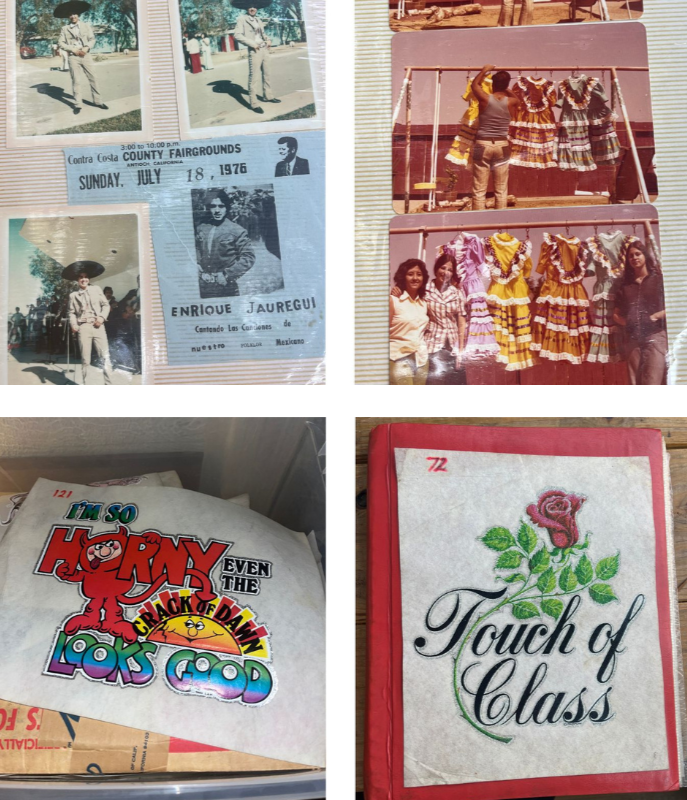
Besotted in both love and art, Julia and Hector remain one of my favorite erstwhile Bay Area creative couples, along with Joan Brown and Manuel Neri, Ruth Asawa and Albert Lanier, and Diane di Prima and Amiri Baraka, just to name a few.
One thing that distinguishes the San Francisco Bay Area artistic community is its enduring ethos of collaboration over competition. Last week, I interviewed five of the Bay’s beloved creative couples to get an intimate look into how they navigate the terrain of artistic practice and romantic partnership. Here is what they had to say about spending more than a decade constructing their art careers together in the Bay Area. I mean, hey, this platform is called “Art Bae” for a reason.
Kevin Krueger & Koak
Please share a photo that represents when you first became a couple and one that represents your present-day relationship.

Image 1: A polaroid taken in 2004, stoned at the Santa Cruz County Fair. I think it's the same week or the week after we had met.
Image 2: A quick image taken today in the studio! (2026)
Occupation?
Kevin Krueger: I’ve worked with artists for the last fifteen years in galleries and exhibition-making. I currently manage Koak’s studio and run Penalty, an exhibition program and print shop in San Francisco.
Koak: Artist.
How do you support one another in your creative pursuits?
Kevin: Early on, I think support meant challenging one another as much as nurturing one another. We both needed someone who could counter our first assumptions and help us see the work differently. Over time, that support has become quieter and deeper. Now it is often about being a witness and an ear. Sometimes that means giving each other room to work; sometimes it means being involved in the practical and emotional realities of the work, like talking things through, listening, carrying paintings, editing text, making tea or dinner. Over the twenty-plus years we’ve been together, I’ve learned so much from Koak about discipline, ambition, instinct, and the importance of pushing past what feels easy or already known.
Koak: He has one of the best eyes of anyone I know. All the shows he's curated, and the work he's made, leans towards being strange and poetic and raw. I think it's a beautiful thing to be able to curate other people's work through your sensibility, through your language. And he's spent over a decade running galleries and looking at art in a way that's very different from how I look at it. So he sees things in my work before I do, and he's honest about the parts of my work that don't feel as honest, which he knows is exceptionally important to me. That's the biggest support there is.
What’s your favorite thing about working collaboratively with your partner?
Kevin: Even though we’ve worked together in many forms over the years, I don’t always think of it as collaboration in the traditional sense. We each come to things from our own direction. Koak’s studio requires teamwork, but the work is always hers first and foremost. At the same time, her way of working has deeply shaped how I approach my own work. My favorite part is seeing how differently she approaches problems. She has a brilliant ability to find unexpected solutions, whether the issue is technical, intellectual, emotional, or some combination. She can transform a problem, not just solve it. That way of thinking has changed how I work.
Koak: That we get to see each other. The work we do takes all of our time. If either of us were with someone outside of it, I think we would know each other considerably less well. We don't really work collaboratively; our practices are separate, but the work we do is deeply reliant and intertwined, and we know how to collaborate across all the parts of our lives — from dishes to deadlines. I don't think very many people get to see their partner in that light.
“My partner always says…”
Kevin: “We have to restart this piece.” A phrase that has made many people in the studio cry, but usually because she’s right. She believes deeply in killing your darlings, even when the darling is eight feet tall, already stretched, and has several weeks of painting on it.
Koak: “Is it done yet?”He has more faith in my speed than I do.
Jackie Im & Aaron Harbour
Please share a photo that represents when you first became a couple and one that represents your present-day relationship.
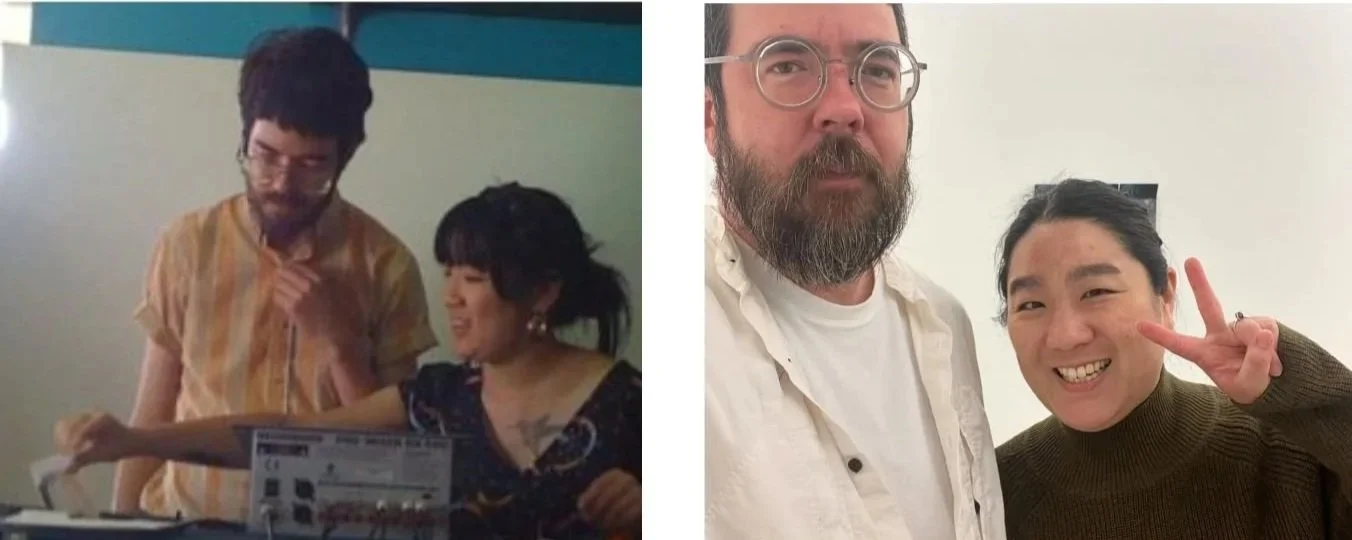
Image 1: Aaron and Jackie, 2010
Image 2: Aaron and Jackie, 2025
Occupation?
Aaron Harbour: My main income source comes from being the web content developer for the Peralta Community College District - building and maintaining websites, and managing communications in the district and other web-based projects. I'm not trained in this stuff, but I am a quick learner.
Jackie Im: Founder of Et al. & Acting Director of Galleries and Public Programs for the San Francisco Arts Commission
How do you support one another in your creative pursuits?
Aaron: We have a shared voracious appetite for learning - reading and looking - and we enable each other's interests. We give each other time.
Jackie: I think we encourage each other to pursue opportunities both for Et al., but also outside of it. Because I've stepped back from a lot of the work at Et al., it's really become a place where Aaron can flex his curatorial pursuits and interests.
What’s your favorite thing about working collaboratively with your partner?
Aaron: From the very beginning, we realized we like nearly exactly the same stuff, so when I'm doing a studio visit or curating a show, I'm confident that either a) it's what Jackie would like or b) she'll let me know when I get off the rails.
Jackie: Aaron is surprising sometimes. I think we generally have very similar interests and tastes in art, but every so often, he'll talk about something he likes that is a genuine surprise. I think it's cool to have been in a relationship for so long and to still get surprises.
“My partner always says…”
Aaron: "No!" When I see another project I could take on that I should steer clear of, she keeps me on track.
Jackie: Not so much “says,” but he always sends good pictures of the cats when I'm at work.
Ariella Robinson & Gray Tolhurst
Please share a photo that represents when you first became a couple and one that represents your present-day relationship.
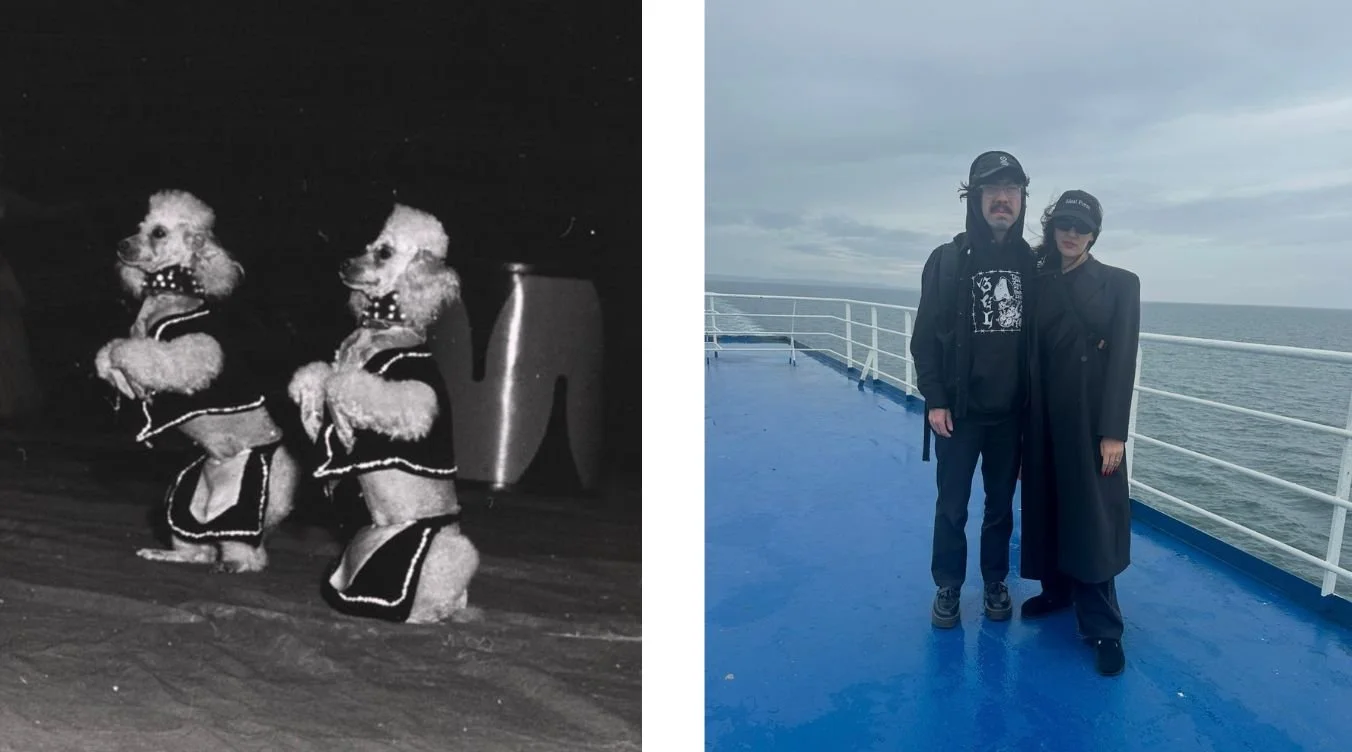
Image 1: Date Unknown
Image 2: Gray and Ariella, 2024
Occupation?
Gray Tolhurst: Musician/ Bookseller
Ariella (fka rel) Robinson: Artist, also teacher and student because I’m in graduate school right now.
How do you support one another in your creative pursuits?
Gray: I’ve become an amateur art handler, rel has gone on tour with me and been to some truly questionable places (an old nuclear bunker in Gyor, Hungary comes to mind). We always make time to see art when we travel, and we always privilege studio time over other obligations.
Ariella: Last week, Gray FaceTimed me from the fabric store when I ran out of materials before a deadline. He wasn’t sure if he’d found the fabric I needed. It’s an exceptionally difficult conversation to have over video. I asked, does this fabric feel more like a shirt or a Spirit Halloween costume? He said it felt like a shirt, but a bad shirt. I told him not to buy it.
What’s your favorite thing about working collaboratively with your partner?
Gray: I think since our studios are in our house (on opposite sides), we often meet in the middle (the kitchen) to discuss what we’re working on, struggling with, etc. Even though she’s not a musician, I respect rel’s opinion more than anyone else’s. If I show her something and it doesn’t enthuse her, I feel like it’s missing something. I think always being able to have someone to bounce ideas off of is the most collaborative aspect of our practices, but rel has also helped design several of my record covers and constantly shows me things that trigger ideas in my mind.
Ariella: For two career artists, we don’t collaborate that much. I think it’s better this way, so we’re not in competition. However, we’re constantly showing one another things we find while working and researching and those conversations are extremely important. The work I am showing at Strike-Slip gallery in June was inspired by some domestic women’s magazines from the 1860s that Gray found for me. A couple years ago he used a photograph from a Ralph Eugene Meatyard series that I had shown him.
“My partner always says…”
Ariella: To not leave my dirty socks out because the dog will run off with them.
Gray: That you don’t have to be the best, you just have to be indispensable.
Todd Hido & Marina Luz
Please share a photo that represents when you first became a couple and one that represents your present-day relationship.
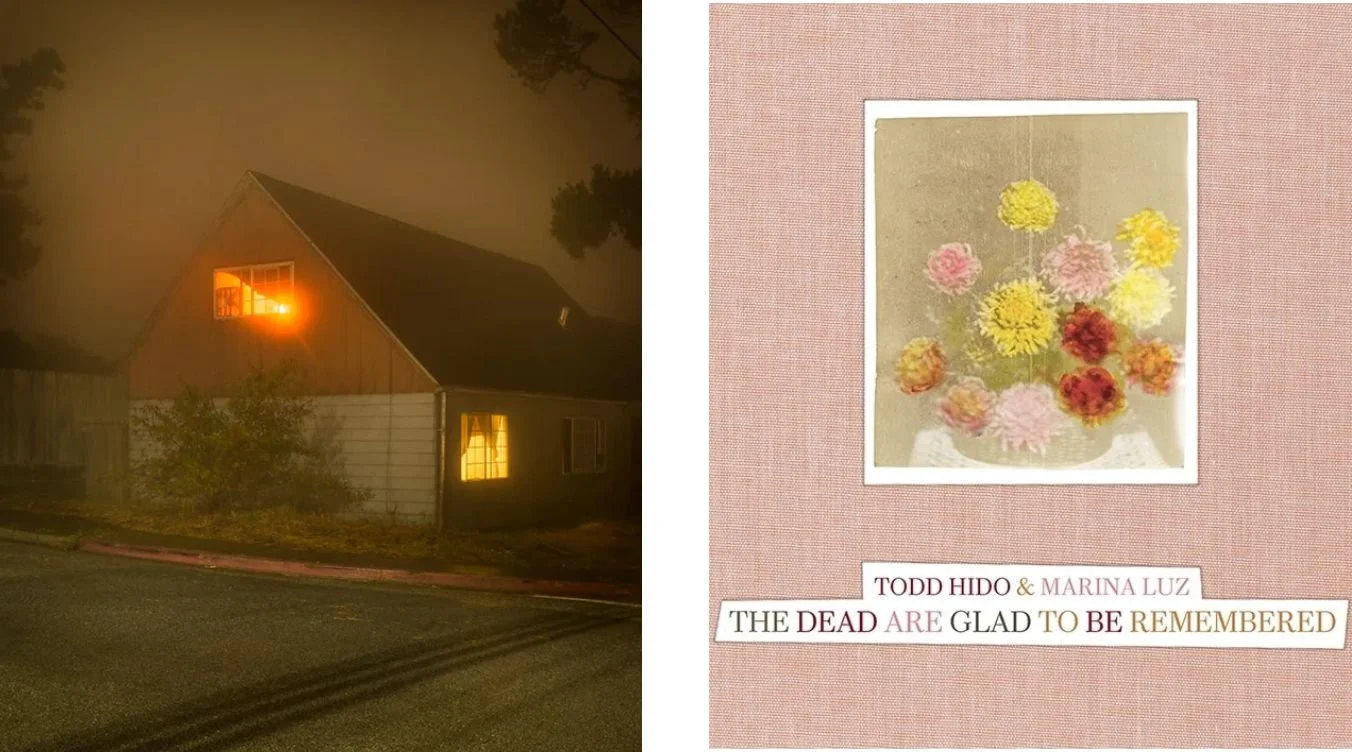
Image 1: Todd Hido, #11542 from House Hunting, 2014
“I took this photograph the first time we went out photographing together, so I think of it like the layer in the geologic sediment that marks the time in my life before Marina, and after Marina.” — Todd
Image 2: The Dead are Glad to be Remembered by Todd Hido and Marina Luz, 2025
“Formally working on a book together (Todd’s idea) last year was a really interesting process. I was worried it would test the bounds of our ability to compromise and still be proud of the results, but it was a great experience.” — Marina
Occupation?
Todd Hido: Photographer
Marina Luz: Artist
How do you support one another in your creative pursuits?
Todd: Marina’s been there for almost every image I’ve made in the last 10+ years. She drives so I can look for photographs, I get her perspective on ideas, and I have an extra set of eyes when I’m out in the world. In the studio, it’s incredibly helpful to have someone I trust to conceptually discuss selecting photographs and doing layouts for books or exhibitions. One way that I support Marina in making her work is that since she draws from photographs, I can make things specifically for her to draw from when needed. I am also the person who cooks in our home and so that way it gives Marie a little bit more time to draw on her own.
Marina: We give each other honest feedback and don’t take any notes personally. Both of us are comfortable considering advice with an open mind, but ultimately we each have a pretty strong inner compass about our own work and trust our judgement.
What’s your favorite thing about working collaboratively with your partner?
Todd: It’s amazing to have a shorthand with the person I spend most of my time with, and it lends itself to having a continuous thread of conversations and sharing images we’ve seen or art, music, books, and films we care about.
Marina:We have very complementary strengths (and almost perfectly offsetting weaknesses). That makes it less intimidating to tackle a project, or sometimes we can catch our mistakes faster.
“My partner always says…”
Todd: “We’re so lucky.”
Marina: “We're so lucky.”
Saif Azzuz & Lulu Thrower
Please share a photo that represents when you first became a couple and one that represents your present-day relationship.
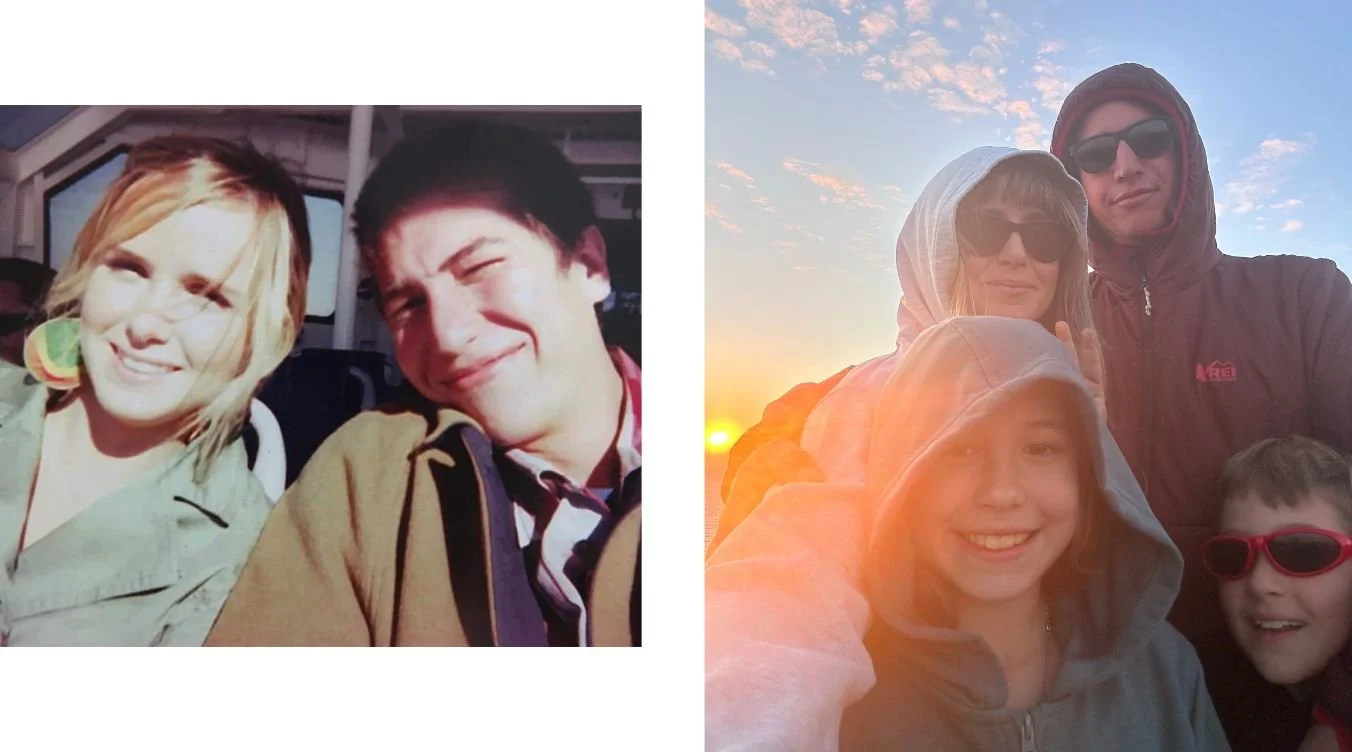
Image 1: Lulu and Saif, 2007, Taken on the Sausalito ferry
Image 2: Lulu and Saif and their children, Montara, California
Occupation?
Lulu Thrower: Freelance educator, fine arts administration, artist
Saif Azzuz: Artist
How do you support one another in your creative pursuits?
Lulu: Saif and I were both born and raised here in the Bay Area, and it's a delicate balance navigating our careers, financial responsibilities, and raising two kids here. We are often reworking our schedules based on what projects we have going on and reassessing goals and priorities as we navigate family life, our values, and what everyone’s needs are at the moment. I feel really lucky and grateful to be making it work, and for everyone who continues to support our careers in the Arts.
Saif: As parents and artists in the Bay Area, we are both juggling many things. Within ever-changing schedules and needs, we try to work hard to make sure that we both have the space and time to work towards our individual and collective practices/goals. That all being said, access to affordable and quality childcare/schooling has been a struggle for us. Lulu providing the bulk of that labor over the years has had a huge impact on my career and ability to pursue making full time, to which I am endlessly grateful for.
What’s your favorite thing about working collaboratively with your partner?
Lulu: Saif has always pushed and inspired me to create ever since I met him when we were teenagers. Back then, it was graffiti and getting a boost to the rooftop or over a fence to get the shot, and now it is working collaboratively on installations in the gallery/institutional setting as well as in our home. Saif has a gentle way of encouraging, lifting me up, and also showing grace and patience, especially as I currently navigate complex healthcare needs. Saif reminds me that there’s always a way to make it work and to never give up.
Saif: I love Lulu’s methodical approach to making and choice of materials. When I first started art school at CCA, Lulu was going to Mills and studying sociology. Lulu’s thoughtful approach to life, learning, making, and being in community helped push me and continues to push me to always think about things in multiple ways and through many different lenses. Although we sometimes approach creation in different ways, those differences create a space to encounter and grow our practices in new and exciting ways.
“My partner always says…”
Lulu: “Do you think this painting is finished?” and “I love you”
Saif: “Babe?” and “I love you”