
Announcing our Art Bae Award 2026 Winners!
Today we are delighted to share with you the recipients of the Art Bae Award. In partnership with the Safety Net Fund and with the support of Intersection for the Arts, we imagined this award as a finishing grant for Bay Area artists, helping to bring projects already in motion into completion. We’re honored to support each with an award of $3000 as they take these projects to their last, crucial step.
Juried by photographer Lucas Foglia, curator Aaron Harbour, and artist Inga Bard, this award came together in partnership with the generosity of dozens of donors who came together in a crowd funding campaign to support artists across the Bay Area.
We congratulate Alex Arzt, Jamil Hellu, and Finneas Etcher as the award recipients and can’t wait to see their projects come to life!
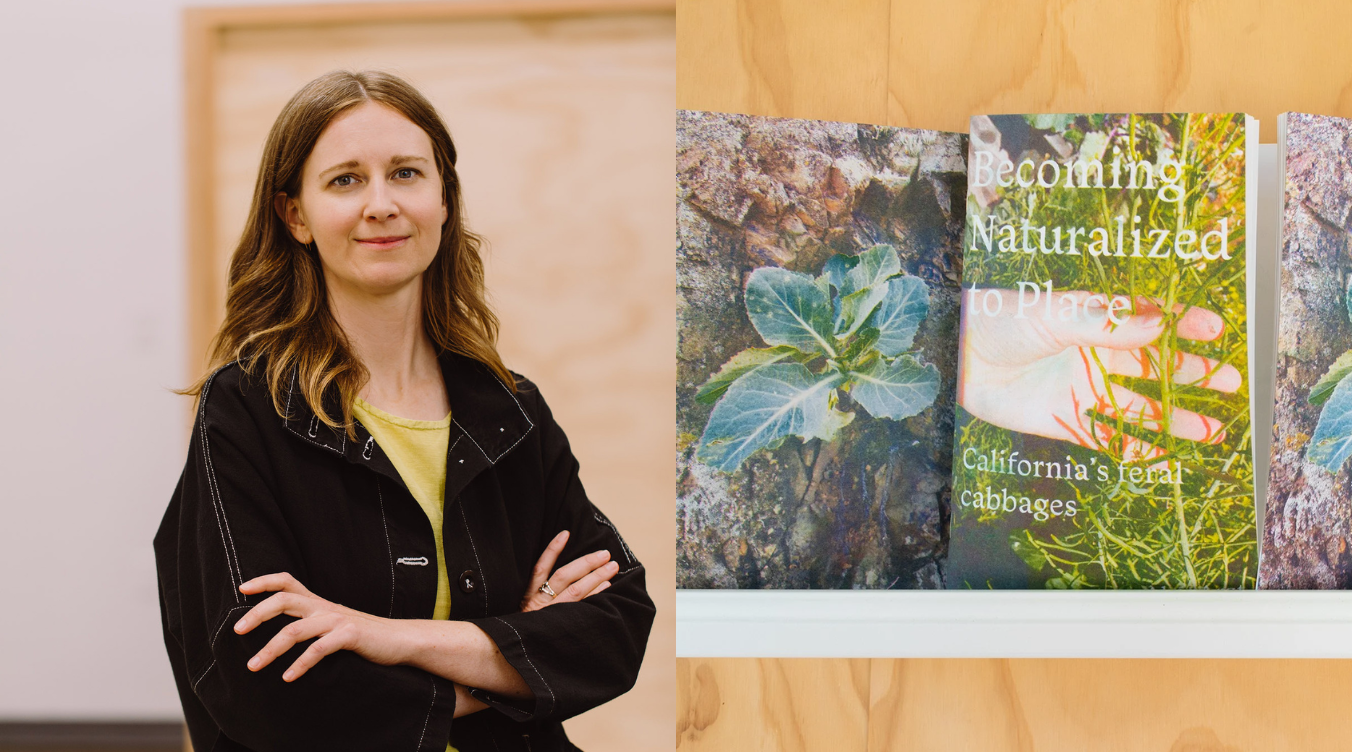
Alex Arzt
Alex Arzt is an interdisciplinary artist, writer, and gardener based in Oakland, California. Her research-driven, place-based practice spans artist books, essays, installation, lectures, and living material processes. She runs A Magic Mountain, a Risograph press with publications in the collections of Stanford, the Getty Research Institute, and SFMOMA. She was an Affiliate Artist at Headlands Center for the Arts from 2018 to 2022 and has received grants from the Puffin Foundation and East Bay Community Foundation. She is currently writing her first book about California's feral cabbages, forthcoming from Heyday in 2028.
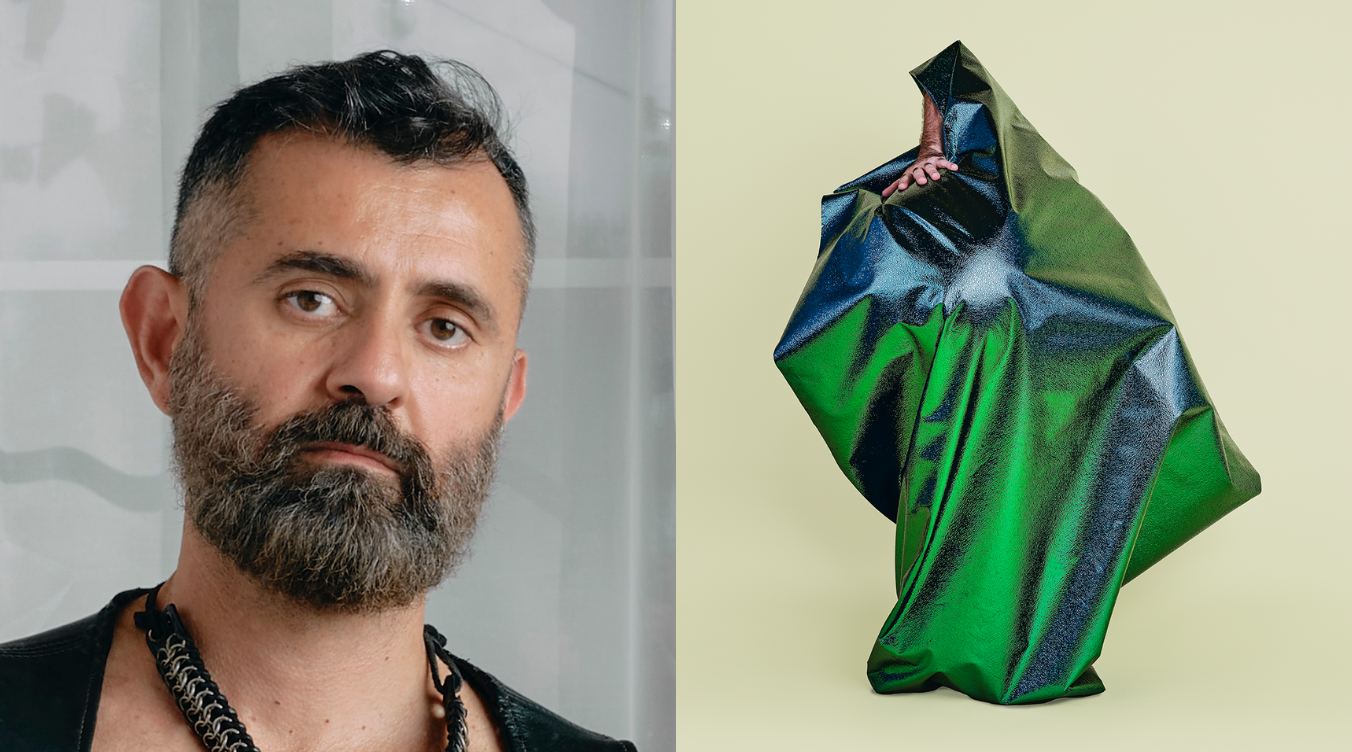
Jamil Hellu
Jamil Hellu is a visual artist based in the San Francisco Bay Area, who creates personal and politically charged projects to expand the discourse on identity representation. Hellu turns the act of self-representation into an urgent gesture of defiance amid an intensifying political landscape of discrimination. Through an interdisciplinary studio practice, his work is a dynamic exploration of queerness, community, and cultural heritage.
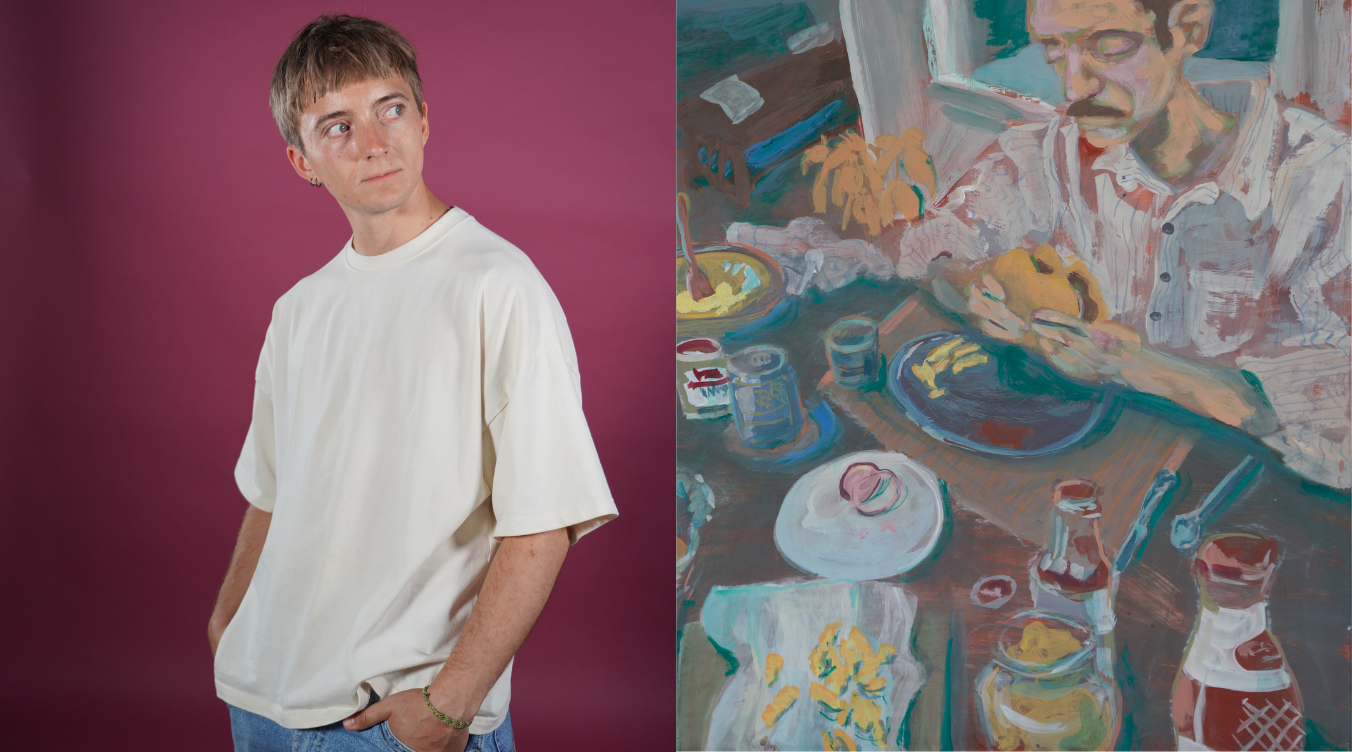
Finneas Etcher
Finneas Etcher is a San Francisco-based painter whose work considers how relationships and domestic spaces shape one another. His paintings depict lived-in interiors with reverence for mess, treating the home as a place where care and neglect quietly accumulate. Drawing from his experiences navigating co-living, caretaking, and autism, he highlights gestures of care—especially the awkward, strained, or uncertain. Rendered in casein on wood panels, the works echo the materials of domestic furniture and are designed to settle quietly into cramped homes; their deeply matte surfaces remain legible from tight angles.