
Tender Attentions: Clarke and Valor at Cushion Works
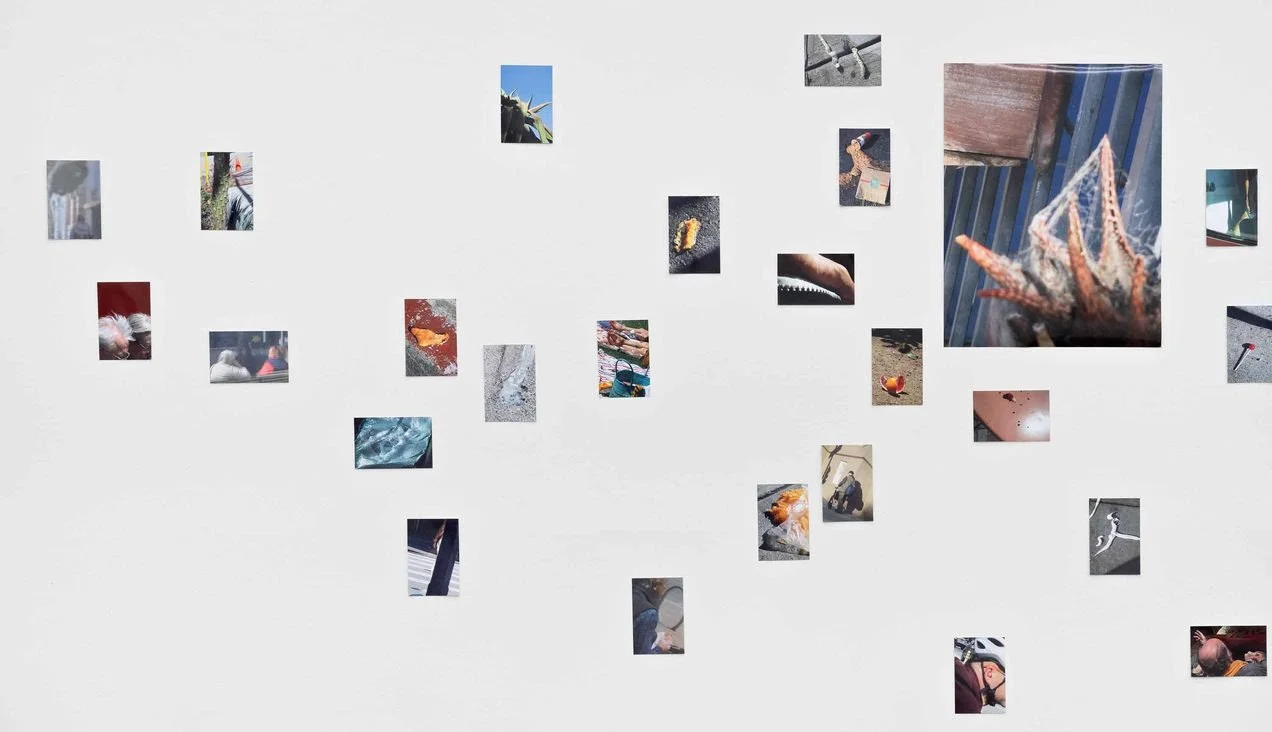
Installation view, Kevin Cohya Valor: Drooling Corner, Cushion Works, 2026
I have a voracious appetite for art, literature, and film. Yet periodically I wonder what keeps me in the game, particularly when most of the time the exhibition, the novel, the latest cinema sensation is simply another serviceable entry into contemporary aesthetics, quickly evaporating from memory. Walking into Cushion Works, Jordan Stein’s lo-fi gem in the Mission, I realized the lure is joyous surprise. And I found it.
Kevin Cohya Valor and Wendy Clarke, two underknown artists of different generations, document the beauty and hideousness of this world with an accepting eye. Their work has heart, and its complexity and humanity offered me a lingering tonic for troubled times.
I had to jog my memory about Valor, who fifteen years ago got his MFA at CCA, where I teach. I didn’t work with him, but I recall his messy, colorful studio, his Japanese accent, and exuberant quirkiness. I figured he’d left town and stopped making art. Somehow Stein got wind of him (he still lives in San Francisco) and invited him to show. Valor makes photographs (and paintings and offhanded sculptures, not on view here) that are wonderfully weird and consistently compelling. So is the show’s uncannily, viscously apt title, Drooling Corner. I had to look that one up and found accounts of drooling from the corners of the mouth associated with Parkinson’s and Bell’s palsy. His work is rooted in the body.
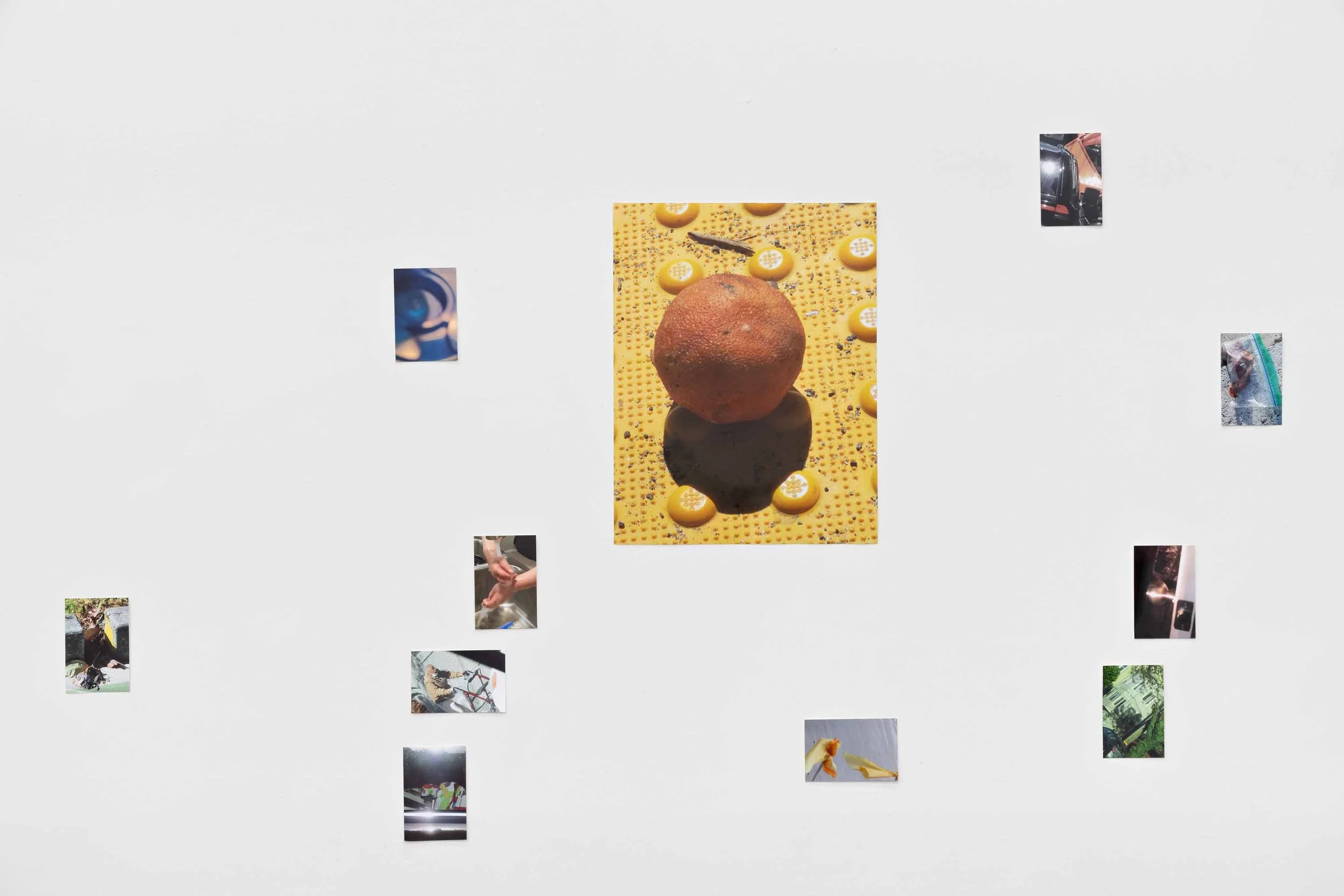
Installation view, Kevin Cohya Valor: Drooling Corner, Cushion Works, 2026
The many photographs in the show are images caught on the fly, a form of street photography that is colorful, gross, and warmly human. Alongside a few enlarged pictures, most of the photos here are standard drugstore snapshot size, taped to the wall in constellations, Wolfgang Tillmans style. And while they share Tillmans’s pleasure in the ordinary, the Valor vibe has a dollop of the absurdity Martin Parr finds in ugly British food. His pictures have a generous disposition and a great eye for offhanded moments that are often grotesque. There are stomach-turning images of, say, a toppled Starbucks beverage, thick and gloppy, brackish and dried on the sidewalk. Or a smashed pineapple that looks like an alien life form, yellow and scaly. There are images of people on the street, seen from oblique angles that highlight mops of dry, brittle hair or the gnarled postures of older people carrying heavy shopping bags under harsh noon light. Such pictures don’t mock their subjects so much as see them. The everyday subjects and intimate scale encourage you to move closer and make sense of what you are seeing.
The photographs are like playing cards, objects to be shuffled. One image informs another, so cohesive is this genuinely strange vision. I’m sorry to keep bringing up Tillmans, an artist who also has such an inviting worldview, but Valor’s approach is in that register, though he refreshingly steers clear of art-world pretensions. There’s a welcome informality to buying the work, too: there is a pile of these prints, of particolored putrefaction and moments of urban life, for five dollars a pop on the gallery desk. The artist will stamp and sign them gleefully. You’ll find yourself picking favorites on the wall. I loved one picture of two beds, one with a vibrant yellow blanket, the other with one that looks like a birthday-party terrazzo pattern. On the yellow one someone with a chubby hand is sorting fuzzy socks. It is warm, vibrant, and appears to depict some kind of group home or assisted living facility (Valor’s day job is working the desk at an assisted living facility). Full of life, heart, and comfort.
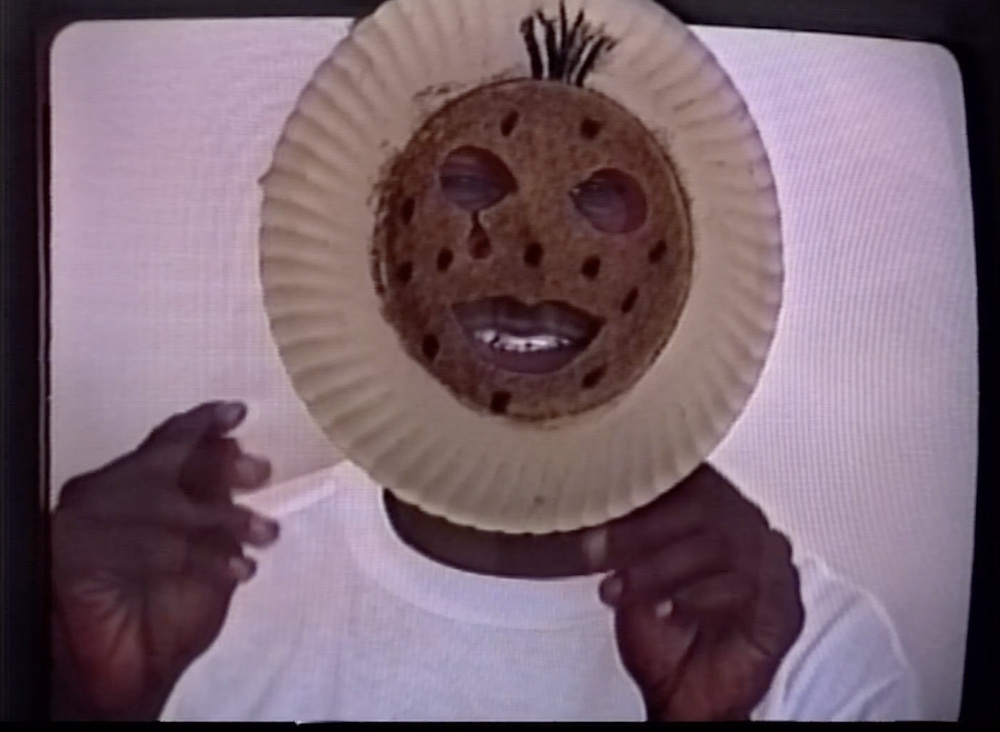
Wendy Clarke, The Prison Tapes (1979-2002), Video (still), 1979-2002
Stein paired Valor’s show with The Prison Tapes, an exhibition of five video series Clarke made from the late 1970s to the early 2000s with inmates in New York and California correctional facilities. She invited participants to speak directly to the camera, using it as a means of communication and self-expression. The gallery text notes that she is the daughter of Shirley Clarke, director of Portrait of Jason, the 1967 filmed interview with a Black gay man.
In The Prison Tapes, the subjects’ incarceration is foregrounded, something that usually signals a sobering documentary, but what makes these videos so engaging is that Clarke’s prompts are not about being jailed but about the humanity of the subjects. They openly talk about their childhoods, their emotions, and their inner lives. According to the show’s press release, Clarke “began to use the camera less as a means to an end than a way of being with people.” Experiencing The Prison Tapes is like an intimate conversation with uncommonly open and revealing people.
In Prison Love Tapes (1979), Clarke asked inmates to talk about love for the three-minute duration of a love song. The responses vary, but share a tenderness and a disarming guilelessness that might bring you to tears. One woman, seated in front of a cinderblock wall, is gobsmacked by the prompt and begins to cry. Another beams at the thought of the love in her life. Men with HIV describe the moment of birth in Amen (1992), earnestly evoking the viscosity of the womb; in Inside Out (2002), young women talk about the abuse they endured as children and how they have carried that trauma into budding adulthood. One of the most affecting projects, Videomasks (1995), involves male prisoners hand-drawing masks that become theatrical faces and props for stories from childhood. A man named Leslie created masks of his dog, a neighborhood character, and a chocolate cookie, because everyone loves them. The cookie flirtatiously converses with an ice cream cone. Fittingly, this is sweet, tender and laugh-out-loud funny.
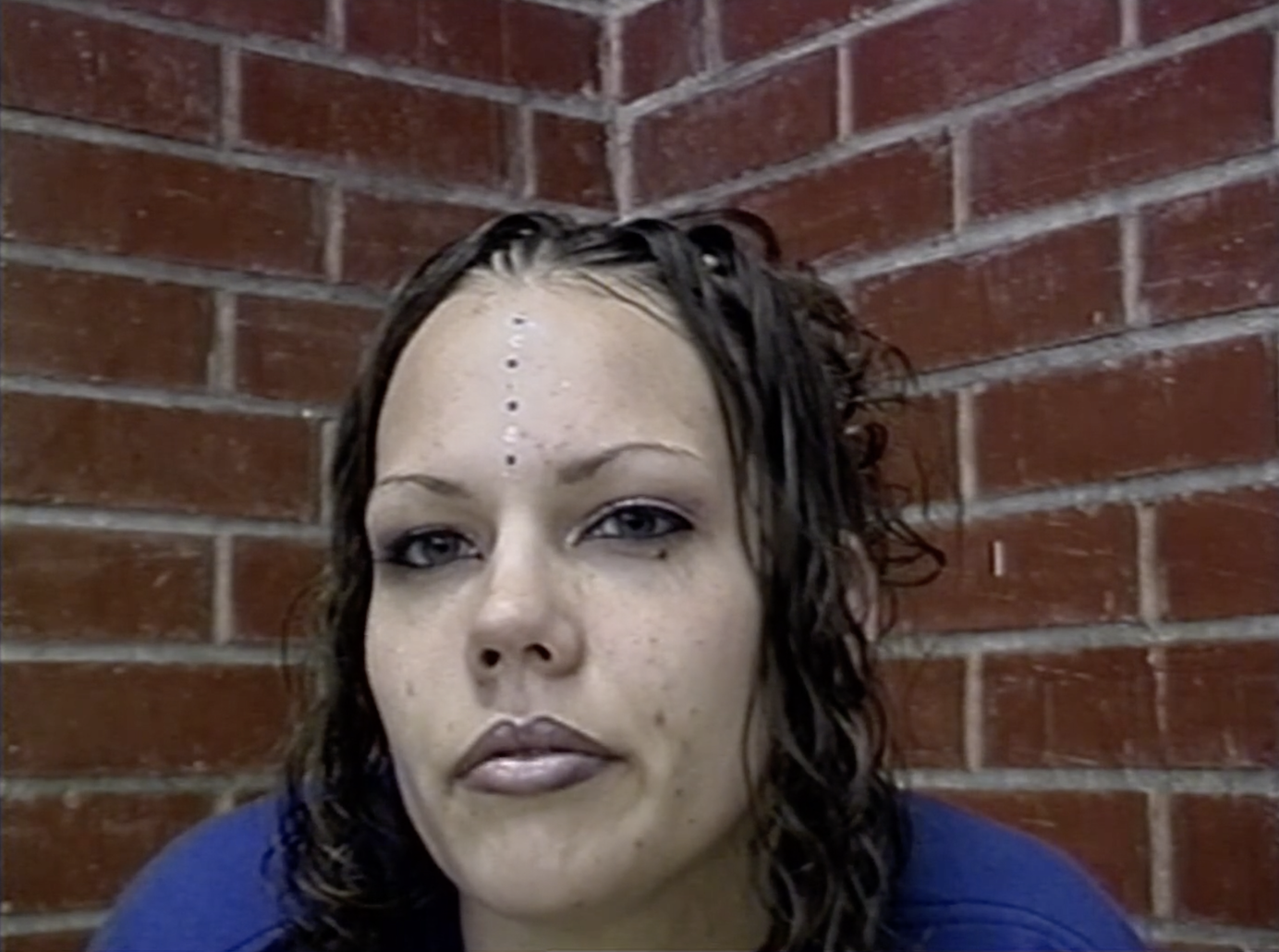
Wendy Clarke, Inside Out, Video (still), 2002
The Prison Tapes, so refreshingly direct, offers a stark contrast to the self-conscious performance of so many social media reels. It seems strange to say that in these works, the camera becomes a conduit for such disarming honesty. The subjects sometimes express awkwardness, but mostly they take the prompts seriously. The tapes are even more eye-opening in this moment of cruel incarceration, when live-streaming an execution has recently been proposed.
I can’t recall another gallery visit where I had to tear myself away from long-form videos, most running from around forty-five minutes to an hour, because I felt so much life coming from them. If they are not aesthetically exciting, they are nevertheless deeply absorbing. Both exhibitions are uncommonly life-affirming experiences, in all their complexities, and worth carving out an afternoon for. The pairing may seem unlikely, but Valor’s fleeting encounters have a sprightly, observational yearning that finds grounding in Clarke’s sustained exchanges.
I have such admiration for Stein’s vision for Cushion Works, which is to showcase the underknown, the whimsical, and the quirky edges of a known artist’s practice. “Rooted in radical Bay Area cultural traditions,” as it describes itself, the gallery is a place where you’ll run into artists and friends, people open to the unexpected. And even when a show doesn’t rock my world like this pair did, I invariably leave with a renewed sense of interest and the idea that there is amazing art out there just waiting to be discovered.
A screening and conversation with Wendy Clarke and Nigel Poor, artist and co-founder of Ear Hustle, takes place at The Lab on Saturday, November 7, from 6:30–8 p.m. Doors open at 6 p.m. Admission is free.