
Blue Mondays: Live West Coast Blues by Brontez Purnell
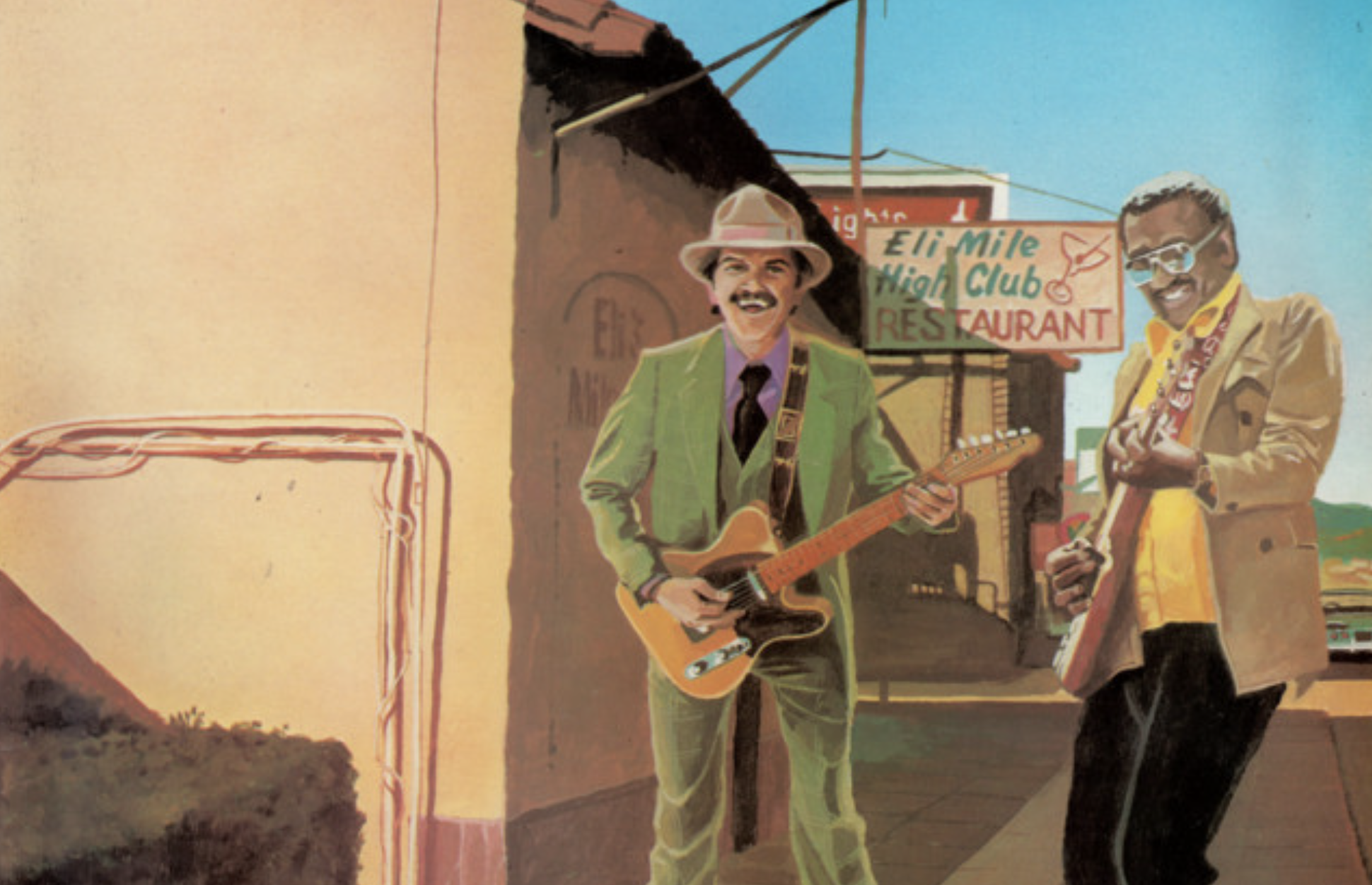
Every Monday – 7PM–11PM
At Eli’s Mile High Club
3629 Martin Luther King Jr Way, Oakland
By Brontez Purnell
My great-grandfather was an Alabama blues musician named Hard Rock Charlie.
He had a mistress he loved. His wife did not. One day she came to the mistress’s house to start a fight. After that, he married the mistress.
He played the Chitlin’ Circuit from Alabama up to Chicago. He made enough money playing music that he did not have to chop cotton, and he even had a servant girl. He got the servant girl pregnant. The baby they had was my grandmother. I come from what you might call a bastard lineage.
He also had a child with his “proper” wife of the house, a son named JJ Malone. In the 1960s, JJ moved to California and came to the Bay Area to work at Galaxy and Fantasy Records. He was also a bandleader at Eli’s Mile High Club in 1972, after Eli was killed by one of his sex workers.
My grand-uncle JJ had a wild hippie girlfriend named Jill who played harmonica. They came back to Alabama every year. Out of his thirty-something grandnieces and nephews, I was the only one who could play guitar like his father.
JJ started Eli’s with Troyce Key, who allegedly won some big “Bandstand” contest and was supposed to be the Oakland Elvis, though blues never became that kind of mainstream phenomenon. The story goes that Troyce slept in his car for a year to save up enough money to buy Eli’s, and he did so with my uncle JJ Malone.
The gay Black filmmaker Marlon Riggs, who directed Black Is… Black Ain’t and Tongues Untied, made a 1982 documentary about Eli’s called Long Train Gone. At one point he says, “You should talk to the Black guy about this, not me.” I have always wondered if he meant my uncle. JJ appears in the documentary but does not speak once. The film also discusses how what had once been a Black club was being taken over by white Berkeley hipsters. This was the early 1980s.
My uncle worked at Fantasy Records at the same time as Creedence Clearwater Revival, but he always complained that the white artists were given carte blanche while he was not, even though it was supposed to be a “roots” label.
He would come back to Alabama and teach me guitar.
I practice African religion, where the belief is that drumming and singing move us closer to spirit. I am now a forty-year-old gay man and far past my punk phase. I would rather do G and dance to EDM these days. But I still believe rock and roll is an extension of African magic. That may be why I continue to put out a punk record every two or three years. I even live four blocks from Eli’s Mile High Club because it feels like my family altar.
I go to Monday night blues almost religiously. It is the closest I get to remembering that, for better or worse, I am part of a rock-and-roll bloodline. I have played rock and roll for almost twenty-five years. The money always seems to go to white musicians who sound like Bo Diddley. Still, I make R&B-influenced pop punk, and no one else really does that. Maybe that makes it important work, even if no one listens.
Monday night blues is also the closest thing I have to honoring my grand-uncle JJ. Some of the older Black performers there still remember him.
I feel very lucky to have been this immersed in my own bloodline.
To quote Ari Up from The Slits, “Rhythm is life, and life is rhythm.”
My life has definitely been the rhythm of the blues.