
Pier Review: Art + Water and the Extinction of the Bay Area Art School
Along the concrete meander flanking the Embarcadero, Pier 29 sits where San Francisco attempts to fend off the tides, where a working city gives way to a working waterfront. Brine and old creosote hang over the concrete slabs, slick with that salty, metallic bay air. The wind is constant. A wedge of industrial real estate, periodically dressed for cultural purpose when other options have narrowed.
The city’s formal art infrastructure lies elsewhere and inland. The San Francisco Museum of Modern Art anchors downtown. Commercial galleries and nonprofits splash across the city—some in the Mission, others off Utah Street—with the largest huddled in Dogpatch. The De Young crests out of Golden Gate Park, the Legion of Honor is an island in the far-off Presidio. A forty minute stroll along the waterfront northwesterly, Fort Mason hosts a raft of cultural projects as well as the annual FOG Art+Design fair. Out here, the dominant neighbors are cruise ship terminals, event spaces, and the diffuse presence of nearby tech offices edging from the Ferry Building.
It’s here on Pier 29 where Art + Water plans to open, a proposed nonprofit arts complex for this cavernous waterfront structure, largely dormant for years. In an essay published this past December, beloved Bay writer and publisher Dave Eggers describes the project as an attempt to “resurrect the artist-apprentice model that reigned in the art world for hundreds of years,” motivated by what he calls the “objectively absurd” cost of contemporary art education and artists in general being priced out of studio space. The plan, as publicly described, is concrete rather than rhetorical: a large pier space activated through a time-limited lease held by the Community Arts Stabilization Trust, with Art + Water operating within that framework.
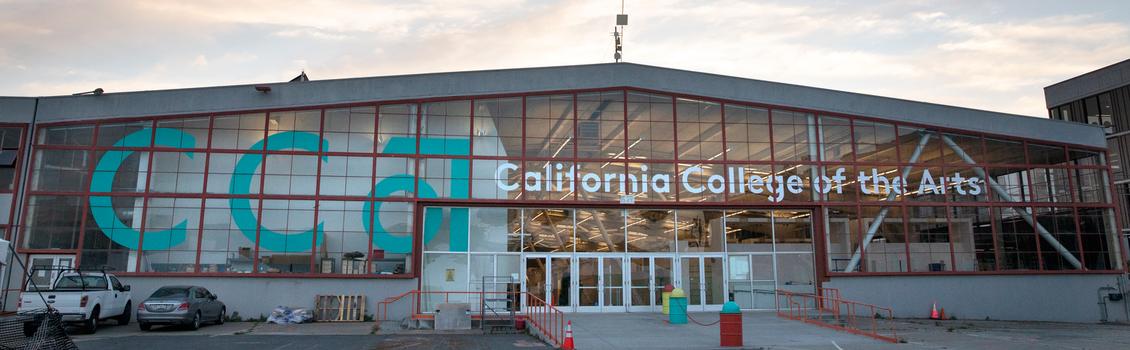
The proposal arrives amid a rapid thinning of the Bay Area’s art ecosystem, not as isolated loss but as systemic erosion. On January 13, 2026, the president of California College of the Arts announced that the last private nonprofit art college in the Bay was shuttering after 120 years, purchased by Vanderbilt University. San Francisco Art Institute has already been closed now for almost four years after nearly 150 years of operation. The Wattis Institute at CCA will remain under Vanderbilt’s stewardship, but most faculty, staff, and technicians are expecting the heave ho. Around the same period, Altman Siegel, one of the region’s strongest commercial galleries, closed. di Rosa Center for Contemporary Art announced it was selling its 217-acre Napa campus for $10.9 million to stabilize finances. The wicked smart international collection project that was Kadist SF sailed away. What is being lost is not just institutions, but continuity: labor pathways, pedagogical depth, technical support, and the slow accumulation of shared knowledge that allows an art world to reproduce itself.
Art + Water proposes a modest, legible intervention against a backdrop of art educational collapse. Eggers’s educational mechanism is intentionally small: ten established Bay Area artists receive free studio space in exchange for teaching twenty emerging artists, framed as a graduate-level education without tuition. His governing math is explicit. If each of the ten artists teaches three hours a week, the cohort receives thirty hours of instruction, supplemented by proximity, informal mentorship, and shared space. The focus is skills-forward and largely two-dimensional, with the argument that historical mastery enables future work “in any media, in any style.”
This model addresses a real problem, and it does so honestly. The cost spiral Eggers names is not abstract; it is felt daily by student-artists who deeply indebt themselves for a dream with little promise of ever paying it back. And also of course against an affordability crisis in the city, and really, increasingly, everywhere in the country.
But an art school is not just a way of teaching. It is also employment: salaries for faculty, staff, technicians, librarians, administrators. It is a labor center and an ecosystem with accreditations, services, facilities, and the unglamorous back-of-house work that makes scale possible. It is certification that carries weight beyond the institution itself. It is durability across administrations, economic cycles, and shifting philanthropic priorities. It is boring infrastructure—offices, insurance, accreditation processes—that makes long-term planning possible. Art + Water is structured precisely to avoid that complexity. It trades cash compensation for in-kind studio space and asks its resident artists to function as caretakers, teachers, and anchors. What is gained in intimacy and focus is necessarily lost in breadth, durability, continuity.
The project’s model reflects the same pragmatism. Education here is not funded as a public right or civic utility. It is folded into a broader cultural engine: gallery programming, ticketed exhibitions, and a sales ecosystem ranging from original works to books, postcards, T-shirts. Perhaps it’s necessary given the conditions, but it situates Art + Water firmly within the object and experience economies rather than outside them. More renovation than revolution; but starved for something good, I very warmly celebrate the project even if I don’t think it replaces what’s been lost. And in ways, it treats only the symptoms while not being appropriately mindful of what got us here.
Eggers’s diagnosis that art school costs are “objectively absurd” is totally accurate, but it describes a symptom rather than the disease. The tuition crisis didn’t emerge from institutional mismanagement or academic bloat (and even if part of this did, it asks for repair not closure). It is the result of decades of systematic defunding of education, the treatment of cultural infrastructure as private luxury rather than civic necessity, and a broad political consensus that individuals should finance their own access to the arts. Art schools were starved of public support and forced to operate as market actors, competing for students who had no choice but to borrow against uncertain futures. The crisis is real. What naming it primarily as a tuition problem avoids confronting the deeper funding failure that made those costs inevitable.
Art + Water responds where we are, rather than where we ought to be. That’s pragmatic, and in a landscape this stripped, pragmatism has value. The project will provide twenty artists with time, space, and community that would not otherwise exist. It will activate a large public venue for exhibitions that might reach audiences the city’s established institutions don’t. It will create a visible site where art happens, which matters in a region rapidly losing such places. These are real contributions, and they deserve recognition.
But boutique interventions function differently when infrastructure is collapsing. What might once have been supplemental becomes, by default, a replacement. Small-scale solutions start to stand in for the systemic repair we’ve chosen not to fund. The risk is not that Art + Water exists but that its existence becomes a reason to believe the larger problem has been addressed: that private effort can substitute for public abandonment, that intimacy compensates for scale, that if ten artists teach twenty students we’ve maintained educational continuity.
CCA and SFAI were all of that, messy and expensive and bureaucratic as they were. They employed hundreds of people and trained thousands over generations. They held space for multiple pedagogies, supported diverse practices, and sustained work that didn't fit market logics. You can't replace that with ten artists and twenty students, no matter how committed. Pretending the scales are even comparable would be misreading what's been lost.
There is another project forming in the same gap: California Academy of Studio Arts, backed by Laurene Powell Jobs and planned for the former SFAI campus. Beyond the property acquisition and stated intent, few operational details are public. Both Art + Water and CASA appear as green shoots in a landscape being cleared faster than new growth can establish. Whether they represent the beginning of something sustainable or simply evidence of what boutique philanthropy can accomplish when other systems fail remains to be seen.
The Bay Area’s art education infrastructure is not collapsing because of bad planning or lack of vision. It is collapsing because we have collectively decided not to pay for it. That decision happens in state budgets, in federal cultural policy, in municipal priorities, in how terribly dependent we are on the fickle discretion of the rich, and in the broad acceptance that if you want to make art, you should be willing to go into debt for the privilege. Art + Water doesn’t change that calculus. It offers relief within the terms austerity has set, which is authentically valuable but the limits still ache.
Art + Water can succeed. I absolutely want it to succeed. It can provide genuine opportunities and genuinely serve its community well. It can be a valuable part of what remains of the Bay Area’s cultural landscape. All of that can be true.
What it should not become is an argument that the crisis has been solved, that boutique alternatives are adequate replacements for the lost educational infrastructure, or that we can sustain an art world on goodwill and temporary leases. The responsibility for repair does not lie with projects like Art + Water, but with the public actors and political systems that benefit from their existence while refusing to fund what they cannot replace. The region needs Art + Water. But it also really, really needs us to start treating art and art education as a public right and civic utility. Both things are true, and neither one excuses the absence of the other.