
Rhapsody: An Interview with Art Collectors Rena Rosenwasser and Penny Cooper
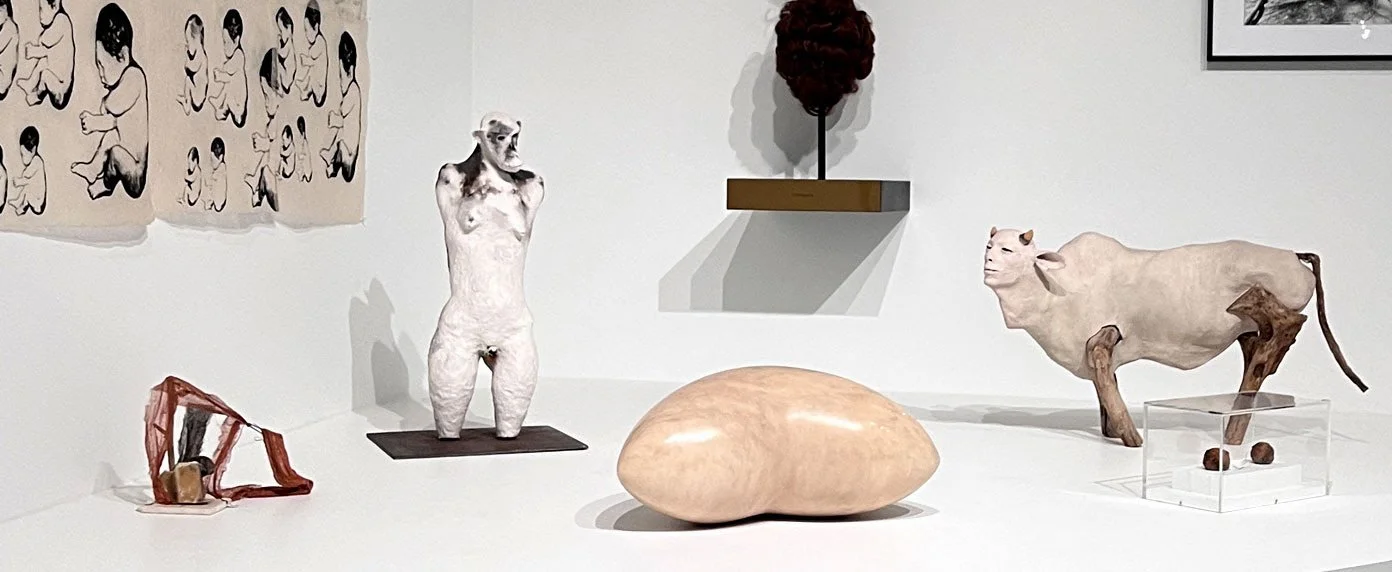
Install shot of Rhapsody (2026), photographed atBAMPFA, Berkeley CA, 2026. Courtesy of BAMPFA and the Penny Cooper and Rena Rosenwasser Collection.
“It feels really lonely. We have lived in this house together for so long and we’ve always lived with the art. It was everywhere we’d turn, everywhere we’d walk, it was on several floors,” Penny Cooper told me a few weeks ago during an interview over Zoom. Cooper and her wife, Rena Rosenwasser, joined me online from their redwood home, surrounded by blue tape marking the uncanny emptiness of their walls, precisely where their artworks had hung.
Cooper and Rosenwasser have been collecting contemporary art for their home in the Berkeley Hills since the late ‘70s. It was there that paintings and sculptures and photographs, scrolls, textiles, and sundry objet d’art gathered slowly through curious chance encounters, conviction mingled with desire, and astonished awe (a word I heard from them more than once). Much of their collection was recently promised to the Berkeley Art Museum and Pacific Film Archive, currently on view in the exhibition Rhapsody (through June 28).
“It’s like we’re really missing something,” added Rosenwasser. “It’s like they have a presence.”
When I first came to see Rhapsody, I wondered what could have brought this world together and wanted to understand what kind of looking, living, and conviction could have shaped a collection like this.
“Talking about the art, seeing the art, living with the art, has been an incredible enrichment to our lives,” Rosenwasser told me. “We just would wander around and when we loved something and loved something together, that would be it.”
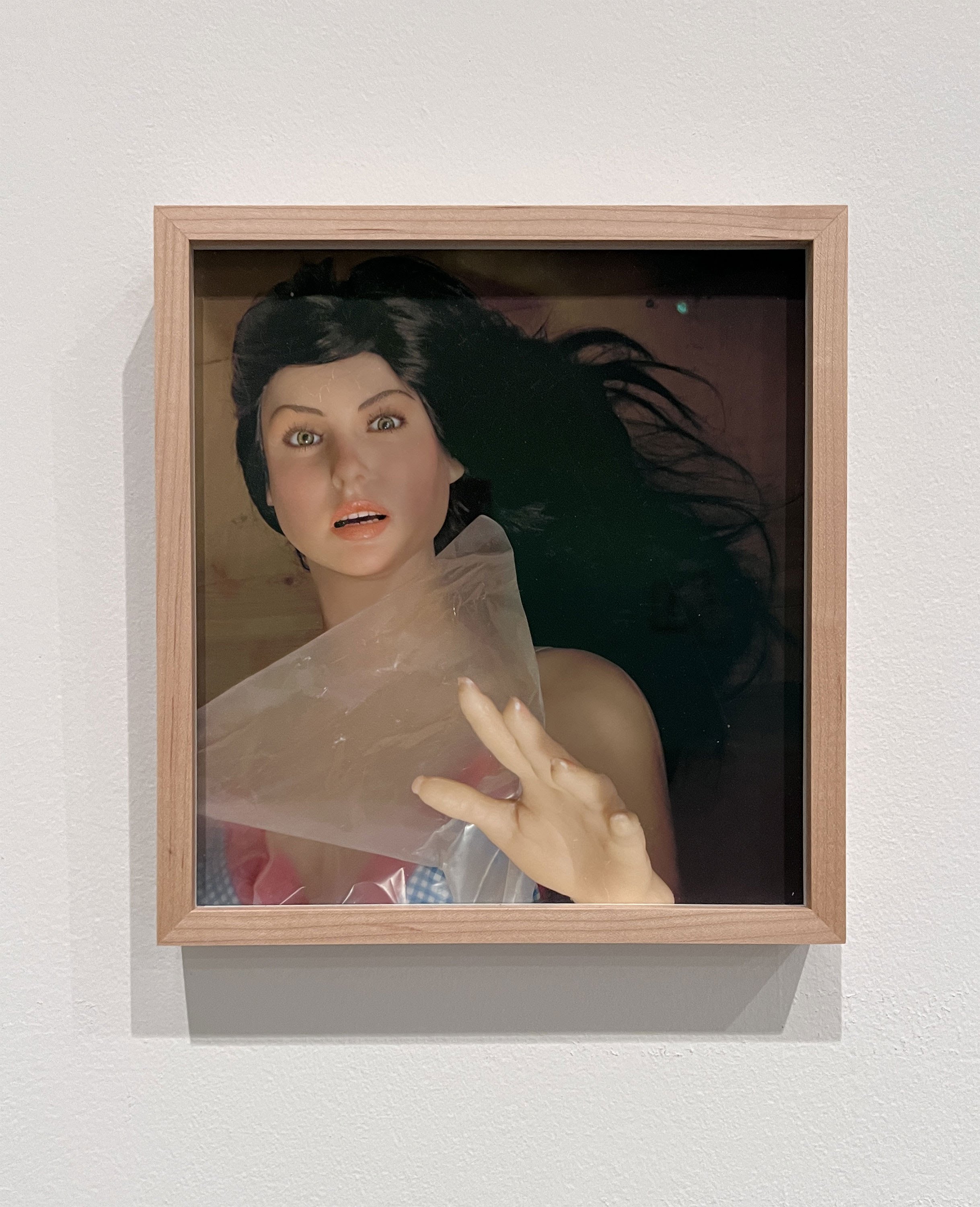
Lynn Hershman Leeson, Found Object (2007). Courtesy of the Penny Cooper and Rena Rosenwasser Collection.
The couple met in Berkeley in the 1970s, and they connected through a shared interest in contemporary Italian design. Penny had recently moved into a redwood house that she had custom designed by Louise Rigg and Ron Senna in 1974. Rosenwasser moved in not long after, and they still call it home.
“Being with Rena felt perfect,” Cooper recalled. Their journey as collectors unfolded alongside their journey as a couple. “One of the things that attracted us to each other was that we were both really interested in art and living with art,” Cooper remarked.
Cooper speaks about art as a form of balance with her work life. “I always wanted to be a lawyer, but I felt like it was really critical to be involved in the arts to live a full life, and so while in college I had a minor in art history.” She wanted, remarking to Curator Margot Norton in the exhibition’s accompanying catalogue, “a more complete sense of the universe.” Cooper is now a legendary criminal defense attorney who had a PBS documentary made about her career in 2012, Penny: Champion of the Marginalized. Rosenwasser is a poet and cofounder of Kelsey Street Press, a feminist publishing house which recently celebrated its fifty-second year.
They say that their taste and intuition are for the most part very much aligned. Cooper brought a deep respect for craft and design into their taste sensibilities, whereas Rosenwasser “had come from New York, where craft was not esteemed.”
They began collecting art slowly. There were early purchases of works by male artists, a Frank Stella print and a Robert Rauschenberg work bought from John Berggruen. Then Cooper recalled a 1977 exhibition of Lenore Tawney’s work in Kansas City, hosted by a college roommate, as the moment they bought their first work by a woman.
Not long afterward came a life-defining realization. Rosenwasser recalled a lunch in New York with Annie Philbin and Philip Yenawine. “I said to them, how come all the dealers downtown are women, but all the shows are of male artists? And Annie said to me, because no one buys the art of women. So that was it. That did it.”
Speaking about why they came to focus on women artists, Cooper made the stakes even clearer. They were two women beginning a life together fifty years ago, a couple who decided to get married the very first day that gay marriage became legal. Thus collecting became yet another way of expressing that life fully and putting their values into practice. They recalled a 1995 BAMPFA show titled In a Different Light, co-curated by Lawrence Rinder and Nayland Blake, a landmark show in queer aesthetics. Rosenwasser told me about encountering “a number of Cathy Opie photographs of people in the queer community. And we were kind of knocked out by them. And so then we went to Opie's dealer and bought her self-portraits. And we just said, God, that's like nothing we'd ever seen. And we loved it.”
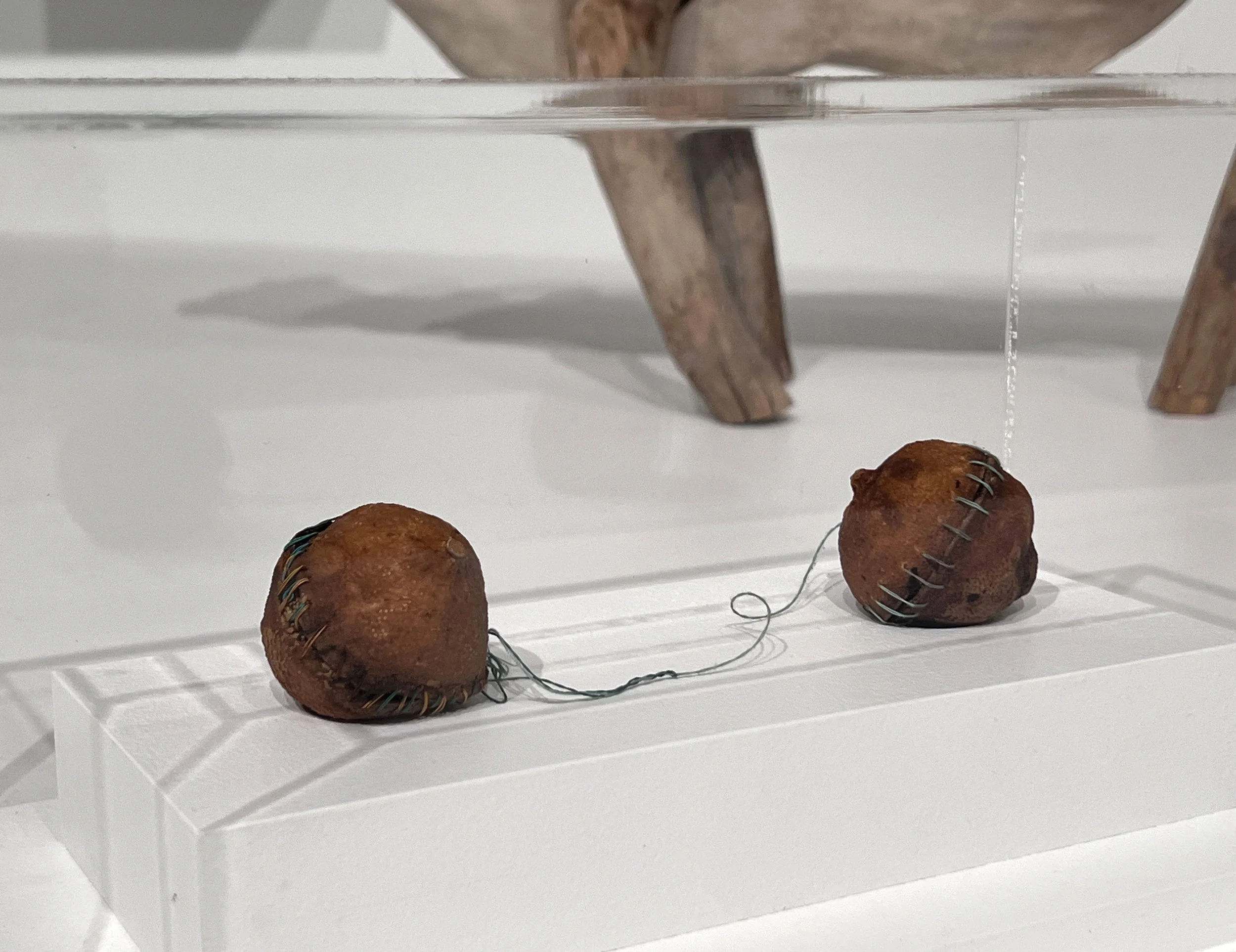
Zoe Leonard, Two Limes (1994). Courtesy of the Penny Cooper and Rena Rosenwasser Collection.
I came back to the exhibition for the second time, after the interview, to take a closer look. I always feel like I have to see artwork in person to really feel its presence, to grok them fully. A jpeg never really does it for me. I was entranced by Daisy Youngblood’s Ape Holding Bird (1988), the female-bodied figure with an ape-like head, seemingly guarding the fetuses floating just above, printed on delicate Thai tissue of Kiki Smith’sAll Souls (1988). I turned around and spotted a woman with short gray hair and red designer glasses. She was gazing closely at Cathy Opie’s photographs and I realized that it was Rena Rosenwasser.
I approached to say hello and she graciously chatted with me while waiting for a friend to arrive. Being struck by how conceptually cutting-edge many of the artists they collected are, I asked her about it. “I studied conceptual art but it’s not about that, the work has to really just grab me. It has to do something visually and emotionally for me.” But I don't quite believe it—or rather, I believe it, but their story betrays the depth they bring to art, even at a glance. Their clarity of thought and openness, evident in both conversation and career, make it no surprise that the collection is intellectually rigorous and materially experimental.
The quality of their collection, along with the pleasure of their lives together, grew through their friendships with artists and dealers. Rosenwasser recalls walking with Kiki Smith through a row of lavender in their garden, picking flowers in one of her sojourns with them. Julie Mehretu stayed with them early in her career, after her MATRIX show. Cecilia Vicuña became close enough that Rosenwasser published two books of her poems and drawings through Kelsey Street Press. They bought work from Mary Heilmann’s studio before she had a dealer.
“We wanted to live with art that astonished us,” Cooper said. “It’s a window into a world that just expands.”
They told me about seeing Sarah Sze’s installation at the Venice Biennale and being “so completely wowed and knocked out by it” that they commissioned a piece via Sze’s dealer. Some time passed before Sze came to their house and measured the space. “We have a lot of high shelves. And she did these architectural drawings and because she came here shortly after she'd finished working in Paris, a number of the pieces in it were little trinkets you’d find in French hardware stores. She and the photographer who helped her install were in this space all day. It was exciting!”
They were not just buying works, but expanding their world. They were living around artists, dealers, and curators in a rhythm of conversations, studio visits, poetry, friendships, and community. They told me living amidst art “broadened the whole way you look at the world. It’s like when you travel to a new country. This is like traveling to hundreds of new countries.”
More recently, Rosenwasser kept returning to a Berenice Olmedo show curated by Norton at BAMPFA and couldn’t get one sculpture, titled Casilda (2024), out of her mind. Olmedo creates hybrid work from orthopedic prosthetic materials. In her work, she challenges all the expectations imposed on bodies as well as the politics of care. For Cooper, it carried an immediate personal charge: her father lost a leg as a volunteer in World War II, and she grew up around orthopedic appliances. Cooper and Rosenwasser nicknamed this sculpture Lou, after Penny’s father, and she said about the sculpture that “seeing her just boosts my spirit.”
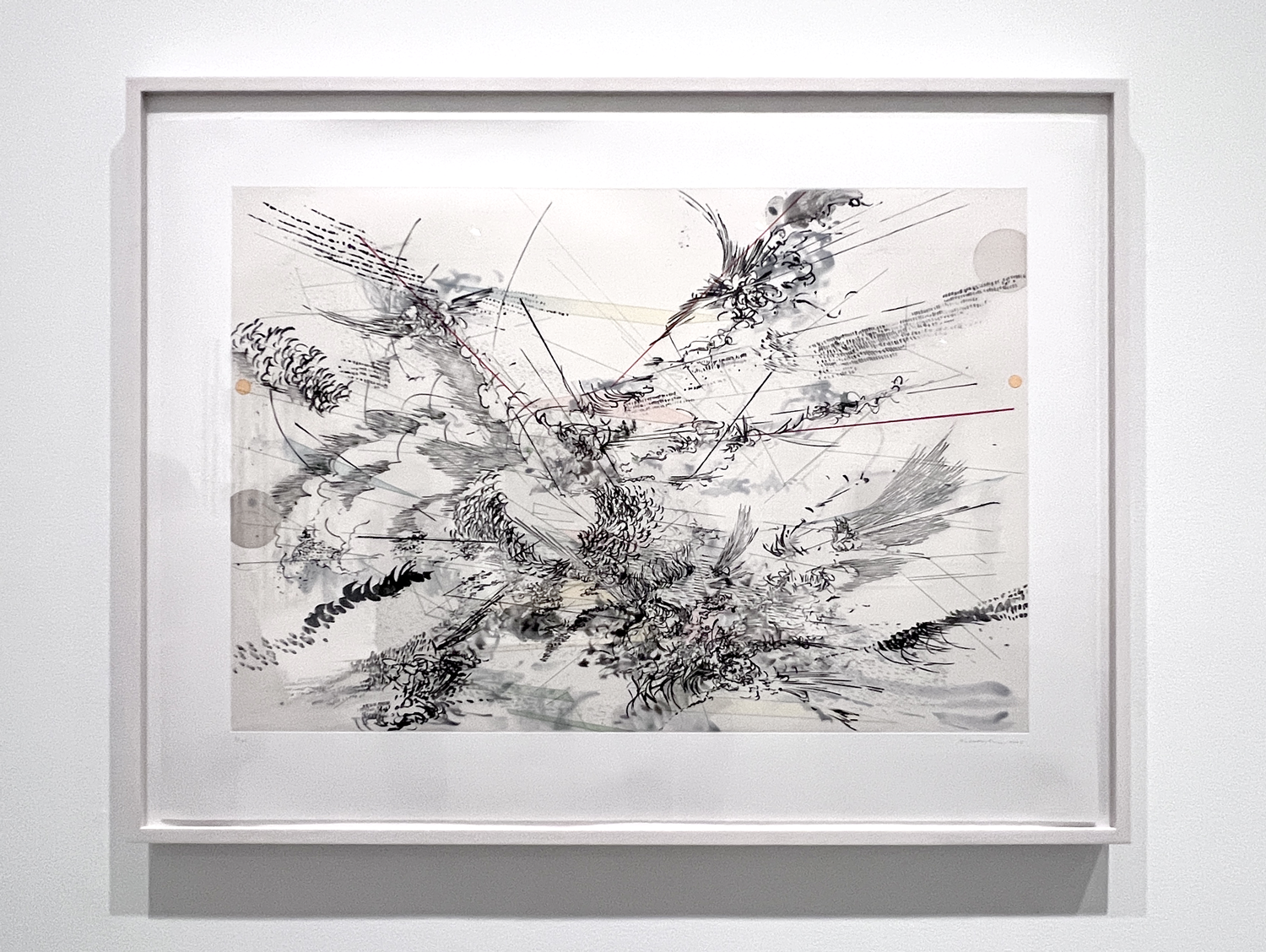
Julie Mehretu, Local Calm (2005). Courtesy of the Penny Cooper and Rena Rosenwasser Collection.
Five decades into the collection, their private life with art becomes public with this exhibition. “It was clear to us that we would eventually give the collection to BAMPFA,” Cooper said. They both went to UC Berkeley for graduate school and Cooper has served on the museum’s board for over twenty years. Cooper, characteristically plainspoken yet dagger-sharp, talked about collecting “as a civic responsibility.”
“Some people give their lives in public service,” she said, “and some in other ways. It's very important to us that our work be appreciated in the future.” At BAMPFA, it enters both the public trust and public imagination, but will also receive the necessary scholarship and custodianship that can come with a museum at a Tier 1 research university. “We haven't shopped our collection around to see who might be interested. Our hearts are in Berkeley.”
Collecting, in their case, was never only about the acquisition of art objects. It was how they made a life together and in community. It was how they expressed their values as women, how they learned to see the world, how they built friendships, and how they widened their perspective. Their redwood house in the hills might feel lonely without the artworks for just another few months. In the meantime, you can keep them company and delight in this fierce, intimate, and unapologetic collection until June 28.