
Seeing the Bay in Paris Photo
Paris Photo 2025 courtesy Paris Photo
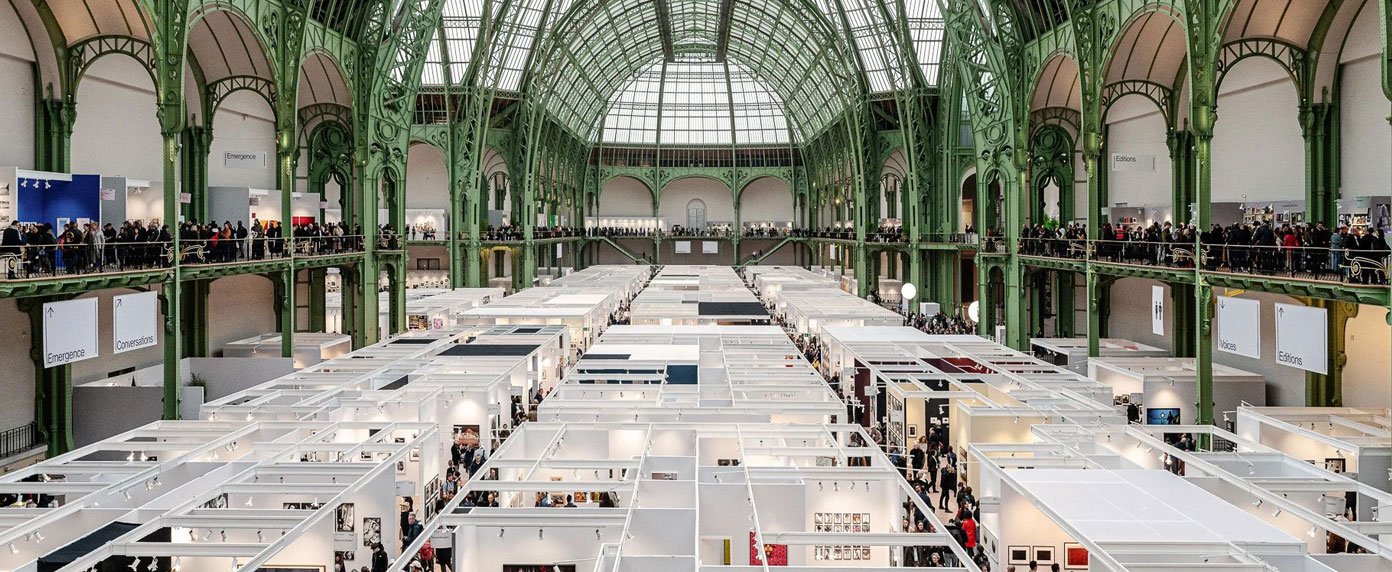
Every November, much of the Bay Area’s photographic world passes through Paris Photo, the most important art fair for photography. Some go to buy and some go to sell. Most spend most of their time in the blur of the crowd in the Grand Palais, the Belle Époque glass-and-iron cathedral still fresh from its half-a-billion dollar polish. Some divert to photography exhibitions across the city, or thumb through books at Offprint or in the Polycopies boat anchored on the Seine. Paris Photo is a pilgrimage, a global reunion of fine art photography (that in its twenty-seventh year has artistic direction from Anna Planas). At first glance the fair looks like one migration. Photographers, collectors, curators, editors, and gallerists arrive in Paris at the same time in a single frame.
That week in Paris, experimental photographers interrogate materials. Conceptual photographers float ideas. Documentary photographers parse narrative. Book people flip through new editions and rare finds. Vintage print collectors debate provenance. Students carry portfolios and hope someone will ask to see them. Dealers repeat stories. Curators tour patrons. Critics and editors move quickly. Collectors speculate about art, while artists worry or celebrate over money. With 222 exhibitors and over 75,000 visitors, almost anything said about the fair is true and the opposite equally true.
Scan any scene there and the Bay comes into view.
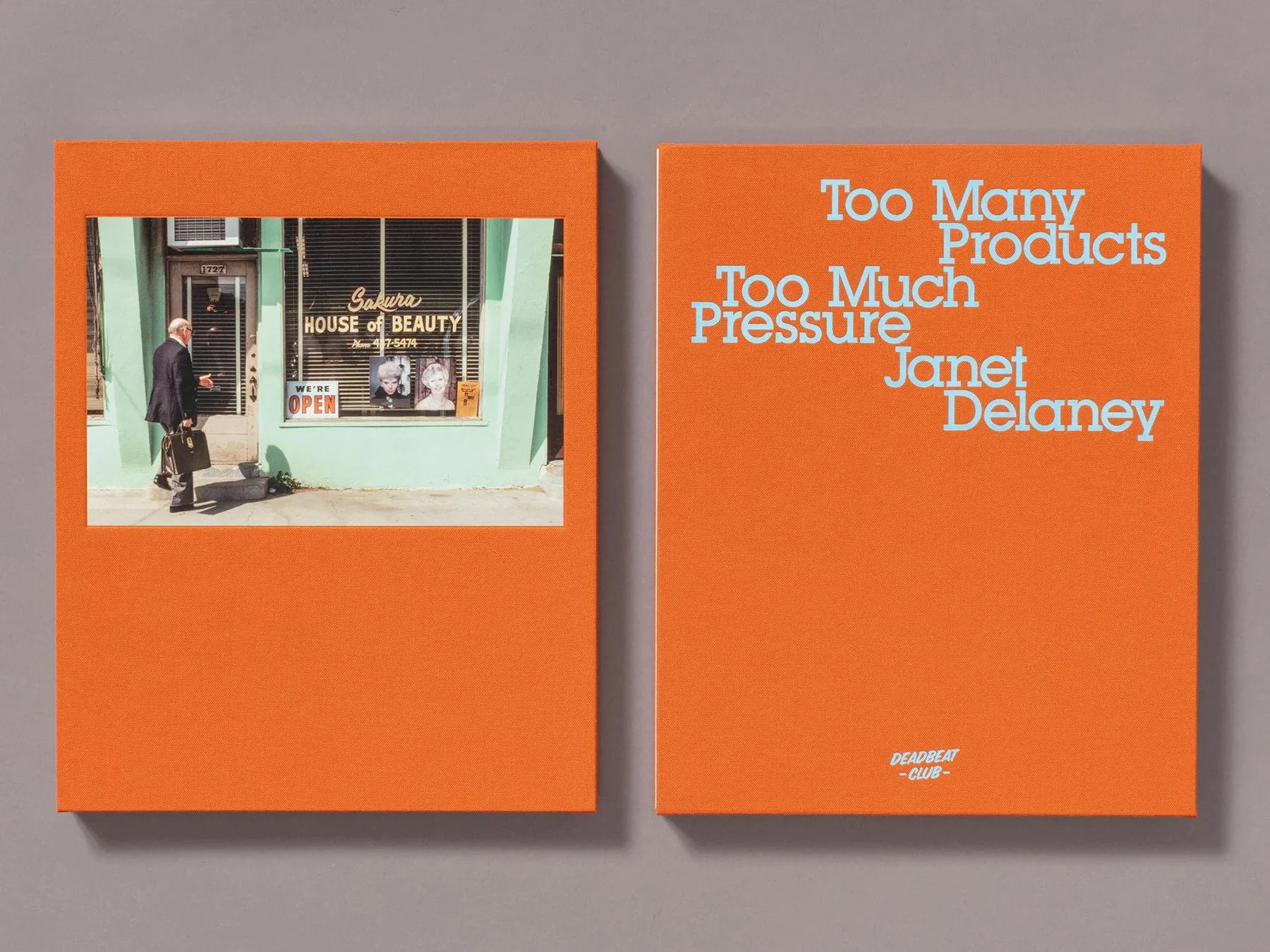
Too Many Products Too Much Pressure, by Janet Delaney, from Deadbeat Club
This year in Paris, among the book people, Todd Hido selected Janet Delaney’s new Too Many Products Too Much Pressure, published by Deadbeat Club, for an offsite exhibition at L'Inaperçu. Back home, Delaney’s work is installed in “Boom and Bust: Photographing Northern California” at the de Young Museum. Mimi Plumb stood on the balcony of the Grand Palais with Radius, signing copies of Blazing Light for her retrospective opening soon at the High Museum of Art in Atlanta. Hido (again) signed copies of the Spanish edition of Intimate Distance, published by RM Books, the French edition, published by Textual, and a new title with Marina Luz and Brad Zellar, The Dead are Glad to be Remembered, published by Atelier EXB. Nearby, Aperture exhibited a special edition of Richard Misrach’s Cargoabout the port of Oakland. Nelson Chan, who just left CCA for RISD, was there with TIS Books and their First Photobook finalist Sacred Place by Balarama Heller. TBW came from Oakland with their stable of books, including a re-release of Lost Coast by Curran Hatleberg. Deadbeat Club also published The Weight of Ash by Ian Bates, and Henry Wessel’s work paired with Austin Leong and Adrian Martinez in Soft Eyes.
When Wessel moved to California in 1969 he said “I walked out of the airport into one of those clear, sharp-edged January days. The light had such physical presence; it looked as though you could lean against it.” Maybe the Bay Area keeps photographers because we are people oriented toward a sharp beauty. Or maybe, the temperature. In the 1930s, Dorothea Lange and Ansel Adams socialized here partly because the air kept their darkrooms reliably sixty-eight degrees.
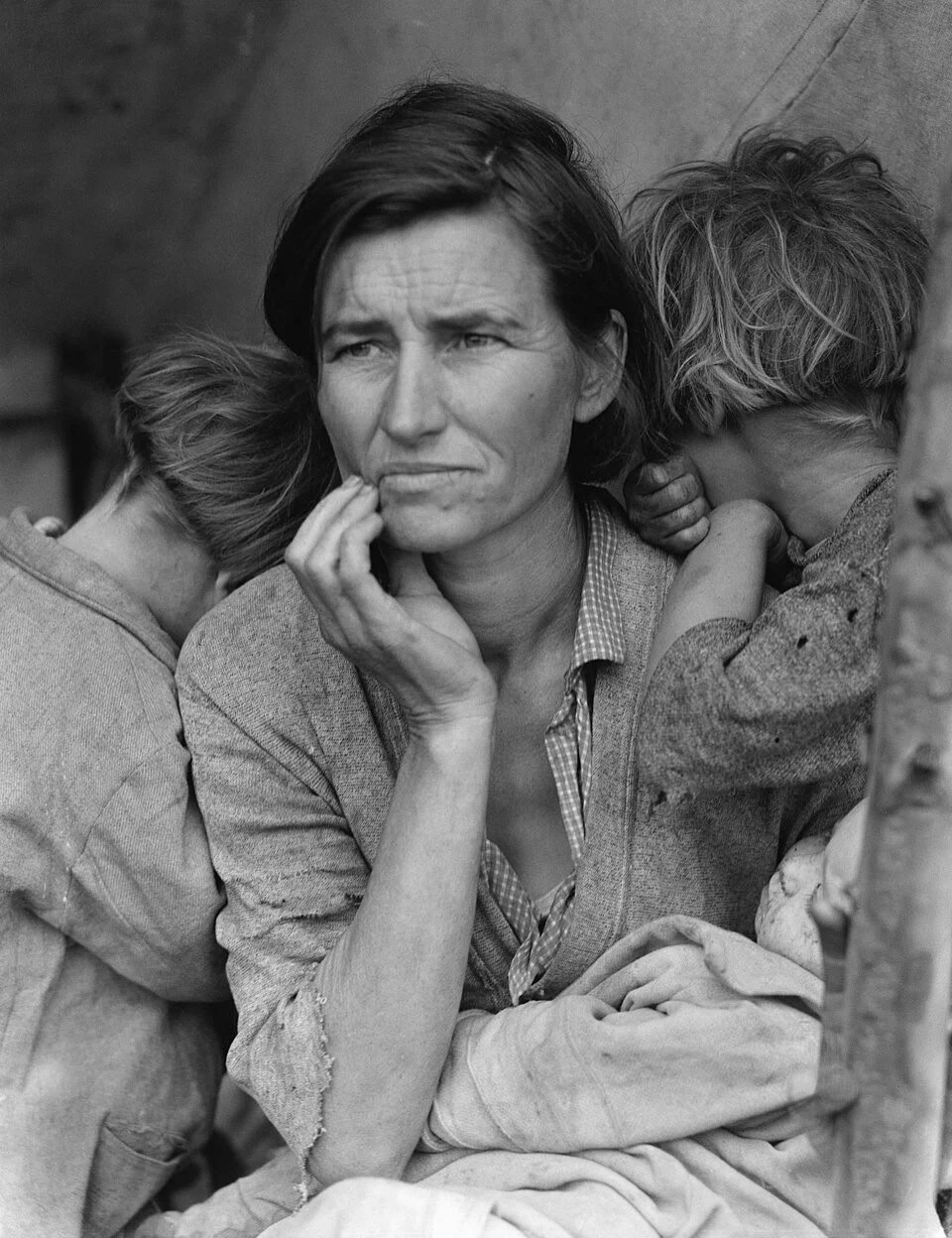
Migrant Mother, Nipomo, California, 1936, courtesy Richard Moore Gallery, Oakland
Those earlier generations were present in Paris too. Howard Greenberg Gallery (New York) showed Dorothea Lange, including a ‘Migrant Mother’ print first captured in 1936 in Nipomo, California, consigned by Oakland dealer Richard Moore Gallery. Hans Kraus (New York) showed a mammoth plate albumen print of Yosemite by Charles Leander Weed. And nearby, the Maison Européenne de la Photographie presented an exhibition of vintage California prints by Edward Weston, who was a founding member of the Bay Area-based Group f/64.
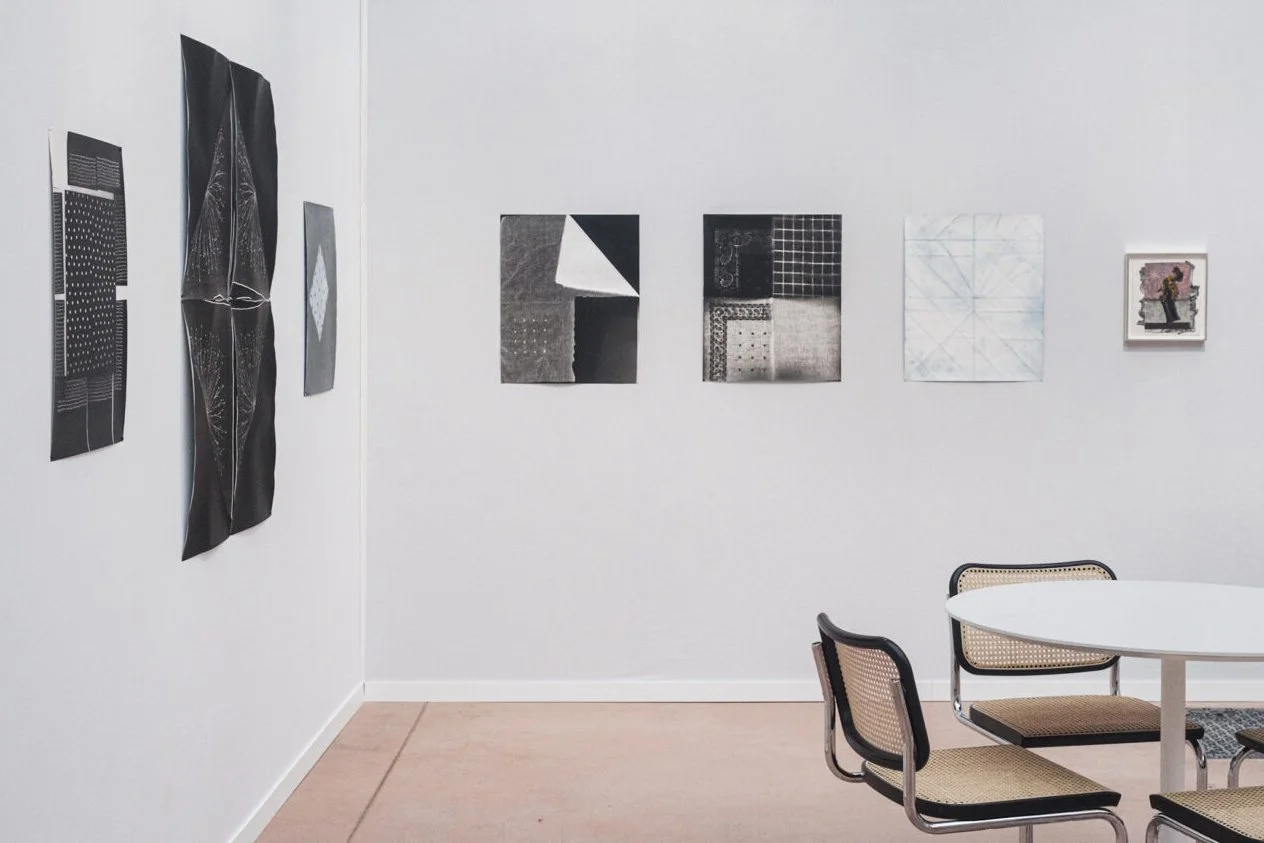
Aspen Mays, courtesy of Higher Pictures, New York
Bay Area artists exhibited and mingled throughout the gallery booths. CCA professor Aspen Mays filled half of Higher Pictures (New York) with her singular prints, which also appeared on the cover of Aperture and in Artforum. Chris McCaw showed sunburned landscapes at Bigaignon (Paris), the only booth with a working darkroom. Casemore Gallery, an anchor of the Minnesota Street Project, showed Bay Area photographers Hal Fischer, Jim Goldberg, Todd Hido, Sean McFarland, and Larry Sultan. San Francisco’s preeminent and indefatigably friendly Fraenkel Gallery presented works by Richard Misrach and Katy Grannan. Galerie Ron Mandos (Amsterdam) included a suite of Sir Isaac Julien’s earliest photo-based works, shown together for the first time. Gallery Luisotti (LA) exhibited Catherine Wagner, whose current installation at 500 Capp Street has been widely celebrated.
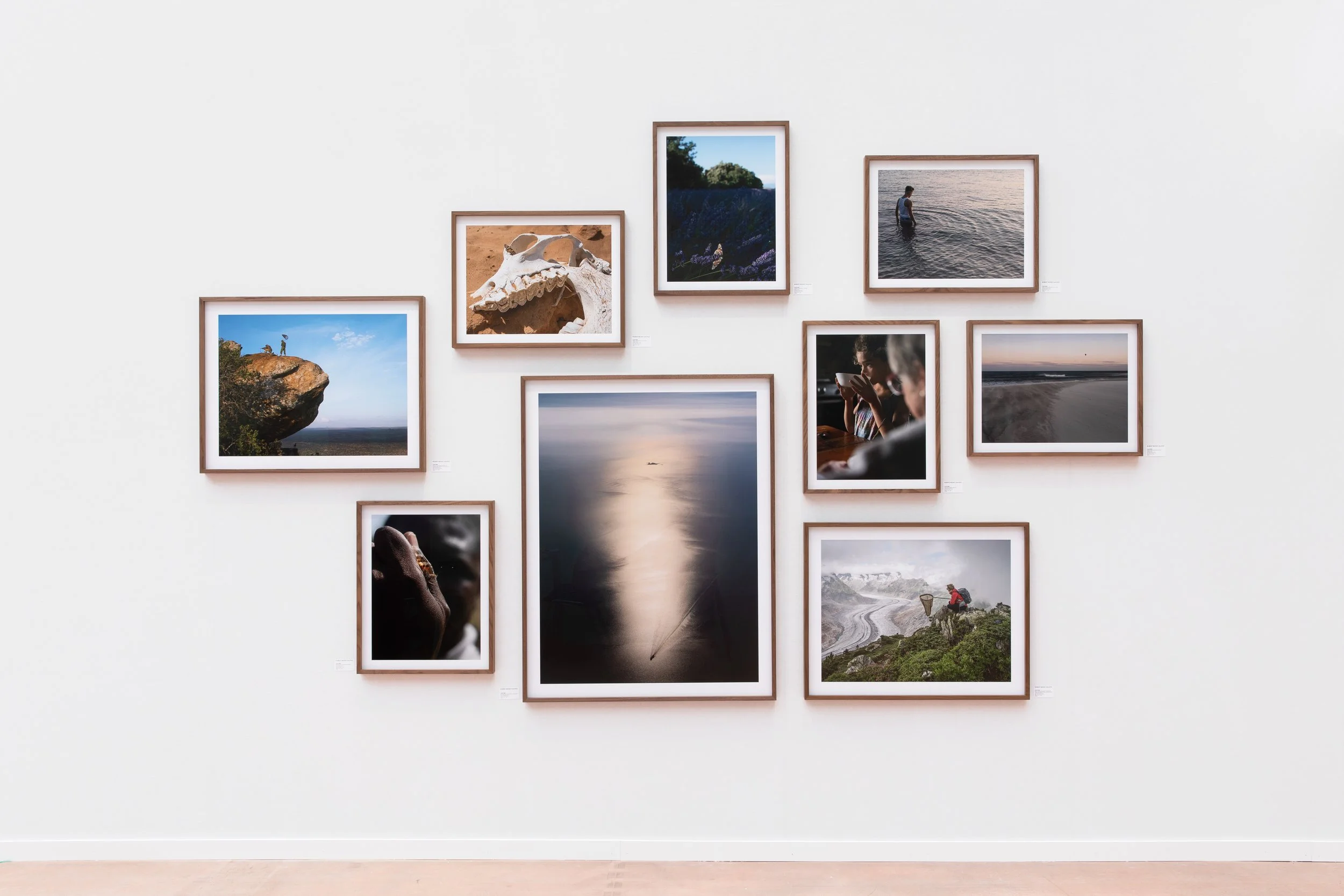
Lucas Foglia, courtesy of Robert Morat Galerie, Berlin
Prints from my own series Constant Bloom, about the longest butterfly migration, were installed at Robert Morat Galerie (Berlin). During the preview, a collector from Moscow who is furnishing hotels for Russians moving to Georgia asked me how many Americans are leaving the US. Then she asked why anyone would stay.
I have lived in the Bay Area for sixteen years. It is free and expensive, inviting and unsettled, boom and bust, always changing, with the perpetual feeling of being on a first date. I arrived when friends were joining startups and stayed because artists kept showing up for each other. Bay Area photographers don’t have a recognizable style like the moodiness of Berlin or the structure of Düsseldorf. What we have instead is a way of circulating: people moving in, moving out, and somehow remaining connected over crit groups and dinner parties.
Maybe an essay about Bay Area photographers at Paris Photo misses the point. Everyone is connected, now especially through technologies that begin and spread from the place I’ve chosen to live. The Bay Area is a city of immigrants, whether from Boston, Chennai, or Mexico City. It is still a place people move to because anything is possible, and because it is photogenic even when it is tragic. Ansel Adams said, “Bad weather makes for good photography.”
Every November the photographic everything gathers in Paris. And in the midst of it, the Bay Area appears again and again, not as a school or style but something less defining and so much warmer: a community.