
Reviewed: Syd Abady & Elizabeth Herring et al. @Climate Control
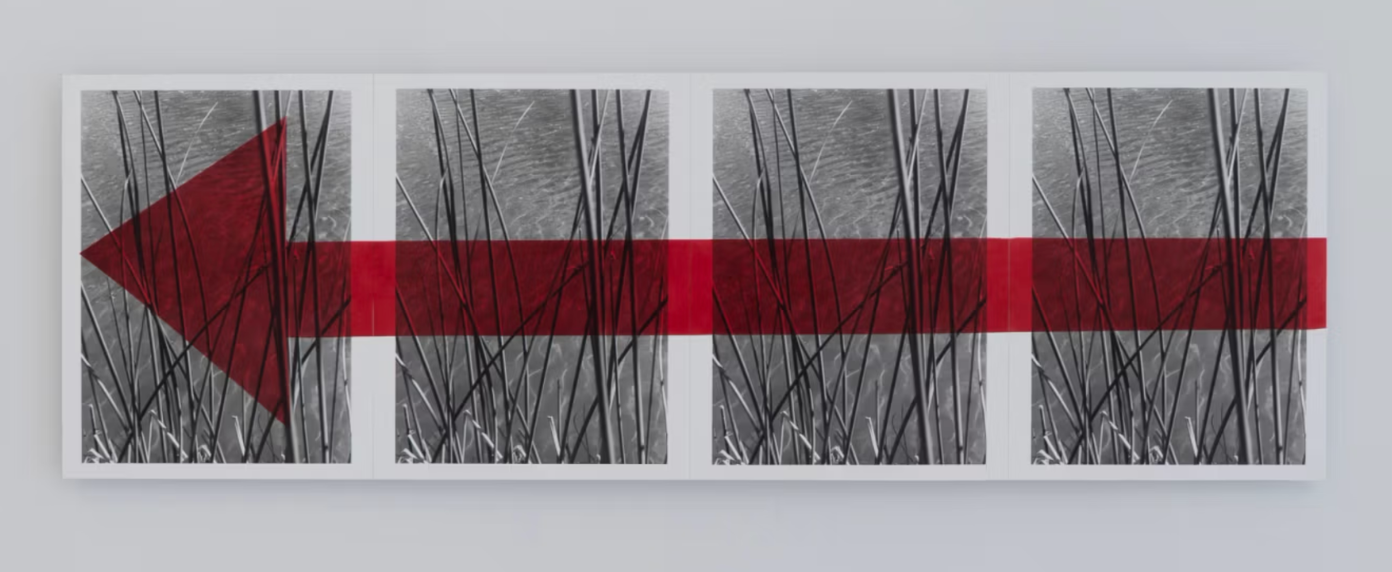
Elizabeth Herring, Meridian Forth (Southern Cattail), 2026, Silver gelatin print, Marshall's oils, 11 x 44 in | 28 x 112 cm
At first glance, I mistook Syd Abady’s needlepoint for the blue tape it mimics: blank white rectangles bordered by the familiar blue of temporary notices, no officious writing to be seen. Step closer and the tape resolves into thread stitched through canvas. The mistake contains the exhibition. The information has disappeared, but the sign retains its humble authority.
With their needle, Abady takes up the form of the notices so often affixed to the doors of New York City apartments, alerting tenants to this or that: an inspection, an interruption, a change made somewhere beyond their control. Emptied of language, the works become almost working-class Ellsworth Kellys, their shapes and colors beginning to signify before the missing words do. Between the artwork and the home it signifies sits the permit, itself another sign. Seeing one of these on your door tells you, in a roundabout way, that you’re home, even as it reminds you that the home is permitted, provisional, held in someone else’s name.
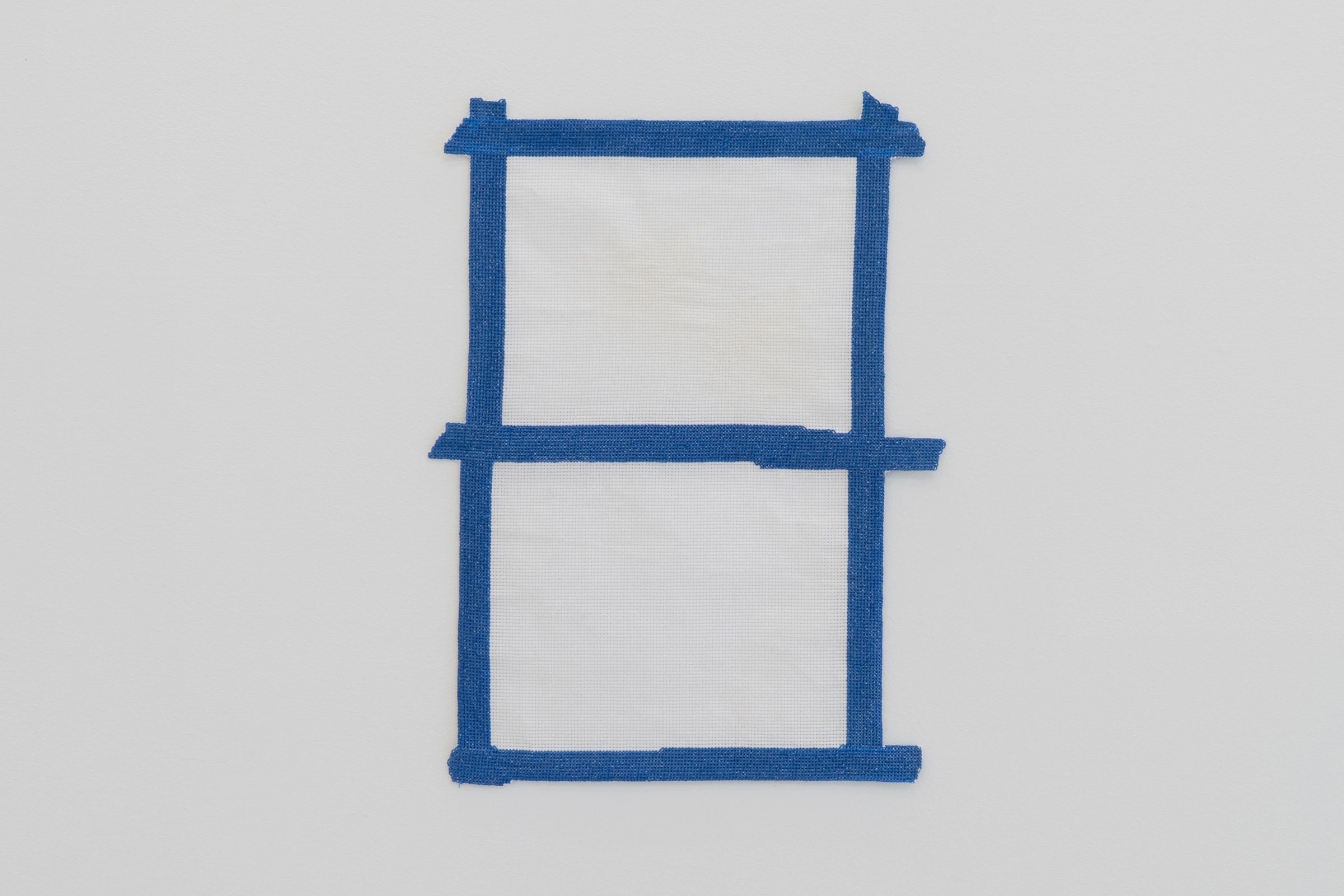
Syd Abady, Building Permit [No. 2], 2026, Needlepoint on canvas, 14 x 18 in | 36 x 46 cm
Elizabeth Herring’s silver-gelatin photographs, hand-tinted with oils, read the Central Coast closely. Jagged red arrows cross the images, their odd angles and uneven edges signifying above all that they are handmade. Across four images of a manroot’s spiky fruit, a hand-drawn red target fixes on the plant as though it had been sighted, selected, or marked for acquisition. Elsewhere, arrows point across photographs of a nature often treated as filler: a cattail, a yucca, the stuff along highways and between buildings. Borrowing the visual grammar of a yard-sale sign or some real-estate listing, the marks promise to disclose some hidden value, but point instead beyond the pictures into great blank stretches of wall. The landscape appears briefly listed, but the promised property never arrives. What remains is space to inhabit without necessarily possessing it.
The front of the exhibition attends to the sly objects that tell us where we are and whether we are allowed to remain there. In the back, many hands make a temporary place together, turning a white room into a kind of commons: not home itself, perhaps, but the things people bring to make a place a place.
Bhavani Srinivas’s rubberized textile, Full movie eng sub (2026), vibrates with sound and, if the title is to be trusted, with the unheard words of a film: sound shivering through the sheet where English subtitles should be. Delilah Davis’s To fill a space (2026) offers poetic instructions, inviting you to pen your answers and tear the sheets free; the torn pages lie scattered across the floor like leaves. Climate Control’s proprietor Nicolás Colón adds Nick Givens and his dog El Chopo, Oakland CA (2016), a dim, cozy photograph of Nick blanketed in bed and cuddling his pup: another way to make a home.
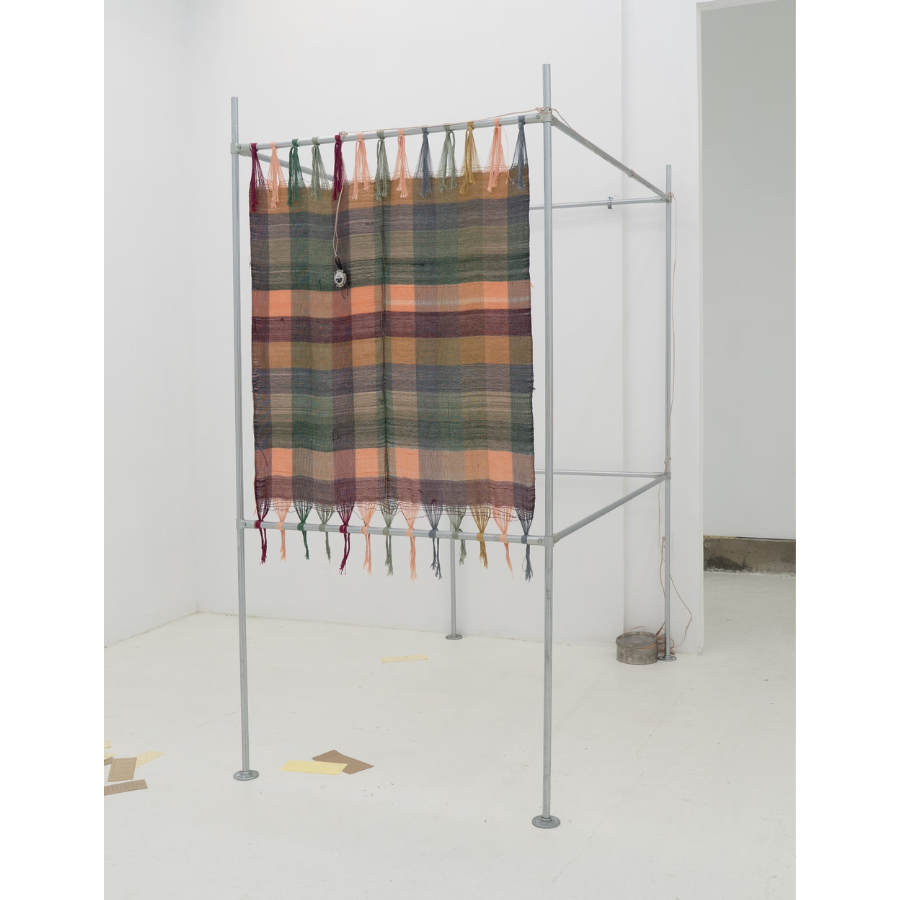
Bhavani Srinivas, Full movie eng sub, 2026, Double-woven cotton yarn, rubber sealant, electrical metal conduit and steel fittings, audio exciter, single-channel sound, cookie tin, 76 x 40 x 84 in
Throughout the exhibition, absence is not emptiness so much as an outline. The signs are blank, the arrows point beyond the image, the subtitles have become vibration, the instructions, loose pages underfoot. Each work marks the place where meaning ought to appear and lets that marked place begin to mean something else.
In her exhibition essay, the show’s organizer, Emily Small, invokes what Lauren Berlant called “world-propping objects”: the things that hold a life up until the world comes overclose and the “sensual circuit breaker” trips. Climate Control takes one of its names from Berlant’s phrase “being in life without wanting the world,” developed in the final chapter of On the Inconvenience of Other People. The name makes the exhibition a kind of self-portrait: a room named for the objects that steady us, hung with signs of how conditional that steadiness can be.
Small also contributes Sky-blue marley flooring flattened against hardwood (2026), a pencil-and-latex-acrylic drawing whose interlocking geometries are rendered in an extra-spare pointillism. Marley, a vinyl dance floor rolled over hardwood, makes a temporary place yours atop the permanent floor you’ll never own.
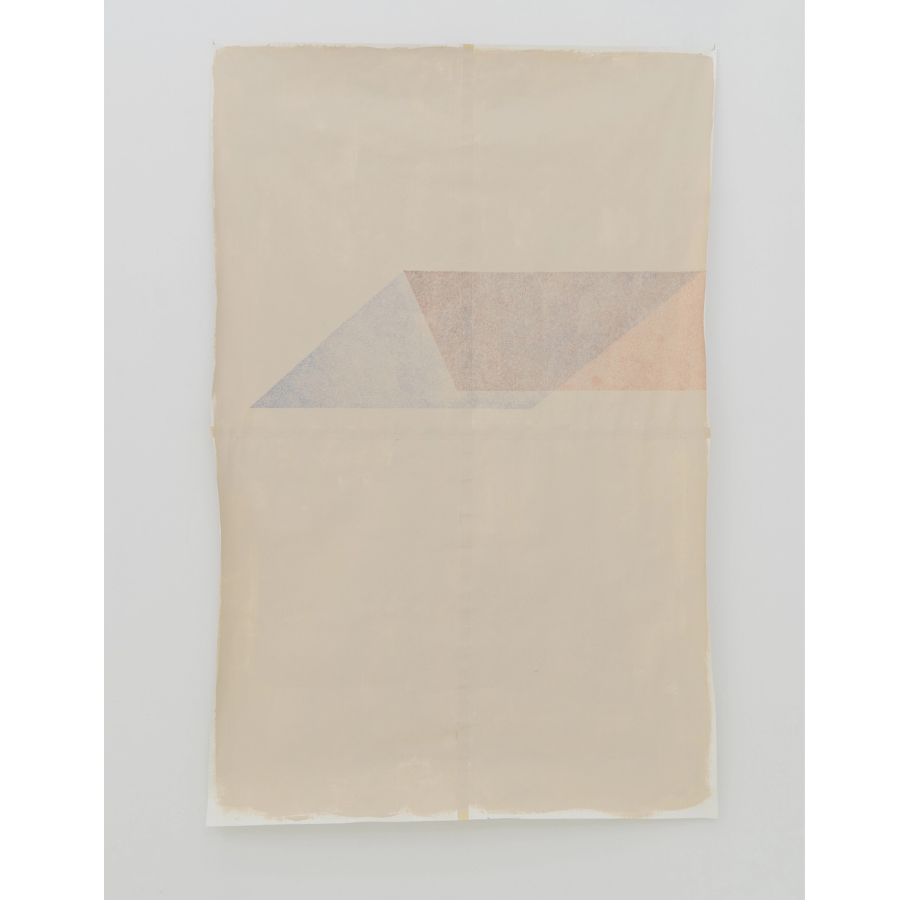
Emily Small, Sky-blue marley flooring flattened against hardwood, 2026, Pencil on paper, latex acrylic
Across the exhibition, home is never simply found. It is indicated, permitted, pointed toward, subtitled, covered over, and occasionally cuddled into being. The works offer no grand spectacle, only quiet signs to decipher and temporary spaces to inhabit. Put together by many and never truly owned by any of us, home is ours only for as long as we keep laying it down and returning.
The show closes August 1st with a finissage.