
Monica Canilao: Vessels for Healing and Transmuting Grief @ FOR-SITE Guardhouse
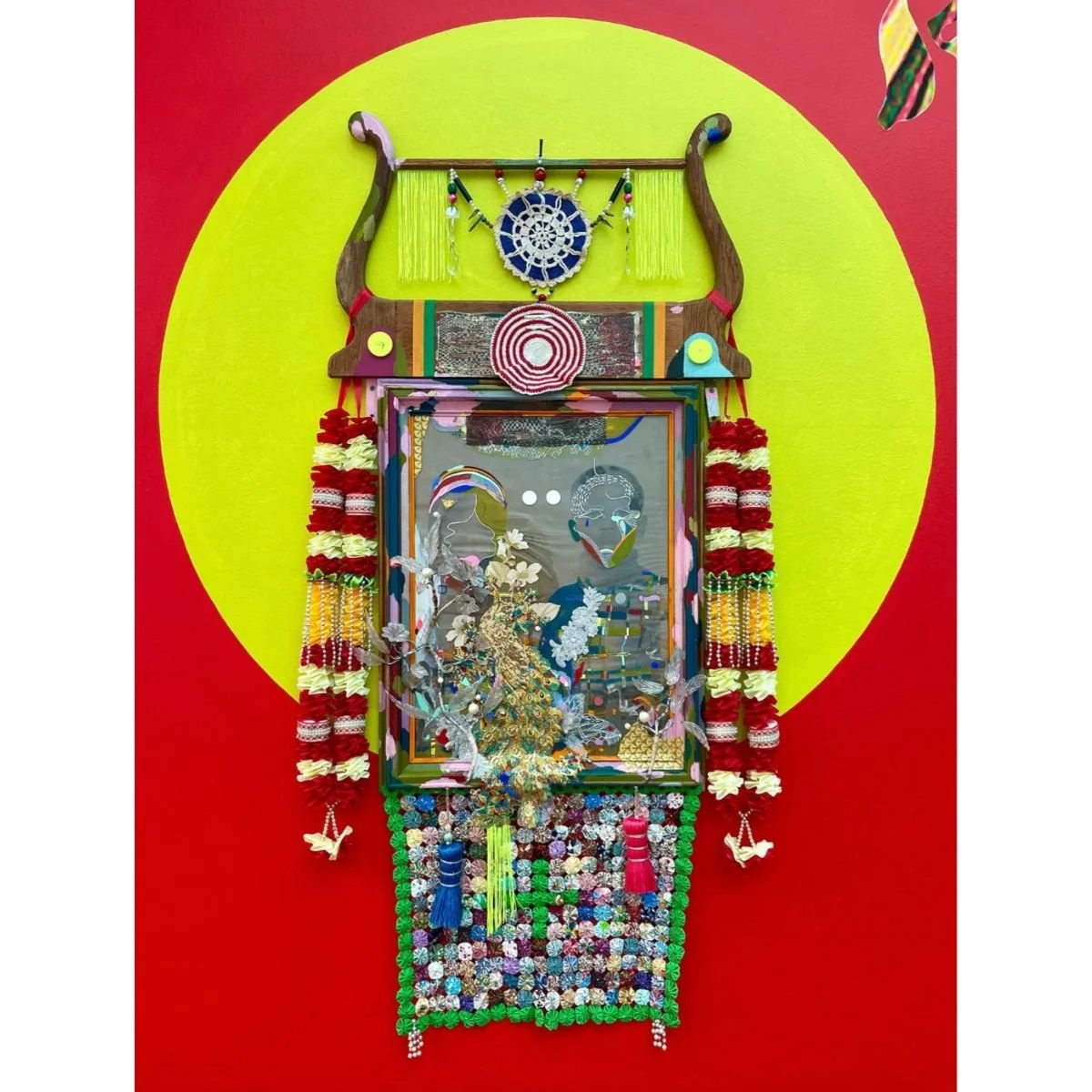
FOR-SITE proudly presents its latest Guardhouse exhibition, Vessels for Healing and Transmuting Grief, by Oakland-based artist Monica Canilao. Through a powerful constellation of reliquary altars, embellished found portraits, and site-responsive assemblage, Canilao transforms the former military guard station into a contemplative space for remembrance, ritual, and ancestral connection. Drawing from found objects, beadwork, painting, textiles, and reclaimed materials, her installation explores grief as both a personal and collective act of transformation, honoring those displaced, erased, or lost through war, colonization, and migration. Situated within Fort Mason—a former U.S.Army port of embarkation and key hub for military operations across the Pacific—the work connects this site’s role in projecting American power abroad to the lived consequences of that presence. Rooted in her own familial history—including her paternal family’s migration from the Philippines to escape martial law shaped in part by U.S. geopolitical influence in the region—Canilao brings these global histories into intimate focus.
Artist Statement
We need mementos, regalia, and altars to hold our stories and tend to the memories that shape us. In this installation, Monica Canilao creates a series of reliquary altars built from found objects yearning for new purpose. Stacks of crystal dishes— used to feed both family and spirits—elevate and support these structures. These works function as tools of reverence: spirit houses, monuments, and memorial shrines that mark moments and place, serving as vessels for holding and transmuting grief—for everything that came before us, and to help guide us toward becoming future ancestors ourselves.
In a related series, Canilao utilizes found portraits to rebuild narratives of forgotten lives, interweaving painting, assemblage, beadwork, cloth, and other materials. These works seek to counter the erasure of colonization by restoring individuality and dignity, adorning each subject with regalia that makes their histories visible, and reimagining Indigenous pasts through new mythologies that honor those lost to time.
Set against the history of Fort Mason—a harbor tied to war and the projection of U.S. power—this work reflects on the destructive forces of domination, assimilation, and cultural erasure. Canilao’s own family fled the Philippines in 1972 to escape martial law, a reminder of how war disrupts home, ritual, and lineage, often displacing people and severing ties to history. This installation stands as a placeholder for memories that existed before war and colonization, an altar honoring ancestral connections, lost homelands, and lives ended in violence. It asks how we preserve these stories and sustain our roots, urging us to recognize the fragility and importance of our shared bloodlines, histories, and connections—and to find ways to keep them alive.
This installation is conceived as a placeholder for the memories that pre-date expeditionary conflict, before colonizers set foot on these shores—and countless others around the world. It functions as an altar to honor each ancestor’s original connection to land, culture, and lineage. Our bloodlines, our chosen families and our ties to one another are precious—how do we keep these stories, these roots, these histories alive? And how do we steward this land in ways that honor all those who came before?
Monica Canilao is a Bay Area native, Oakland-based artist whose multidisciplinary practice generates a personal and living history. Her work weaves together past and present, the personal and collective, and the commonplace and the sacred, using primarily found, non-traditional, discarded and recycled materials to build new narratives.. Working across many mediums, she utilizes fiber, murals, painting, altar work, jewelry, site-specific installation, performance, costuming, set design, printmaking, and illustration as tools to transform the spaces we inhabit. Canilao explores the passage of time, queer and indigenous futures, the imprint of human presence, and embellishing the ordinary as ceremony and necessary. Her practice reflects an ongoing search for a sense of home and a feral desire for human connection within the modern world.