
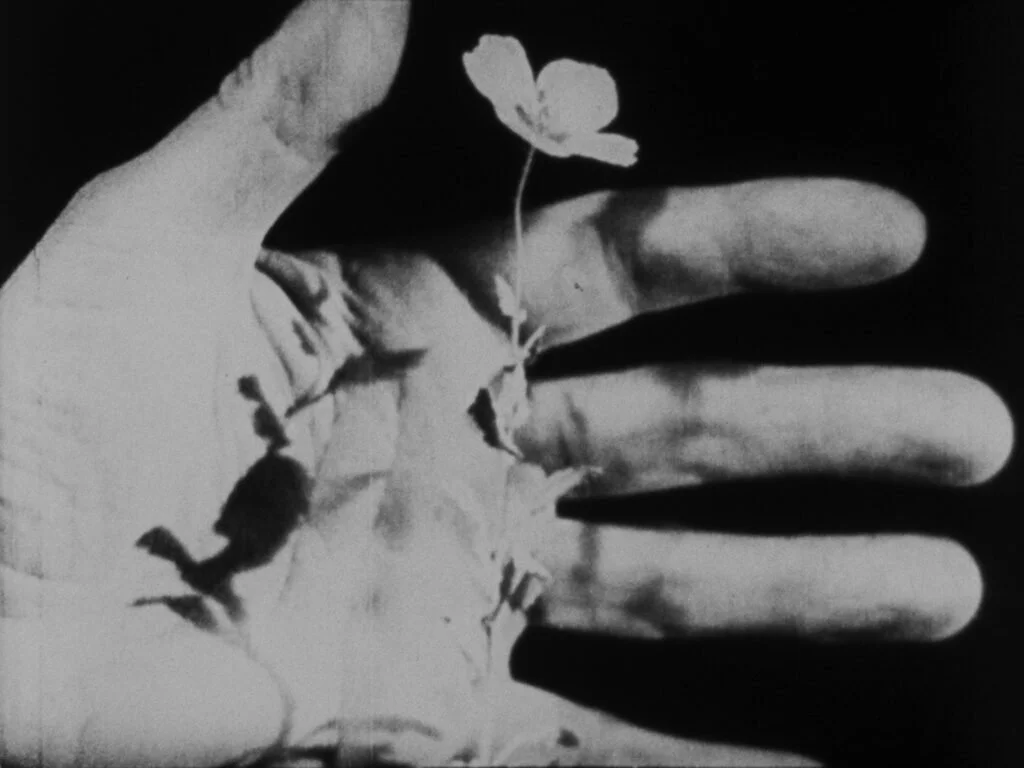
Michael Wallin: Outside In @ SFMOMA
Join us as we celebrate the work of longtime Canyon Cinema artist member Michael Wallin (1948–2016). A stalwart figure of the Bay Area film community, Wallin made vast and varied contributions to experimental film culture and LGBTQ+ cinema both locally and internationally. Wallin began making independent films in 1968 while apprenticing with Canyon Cinema cofounder Bruce Baillie, emerging as a pioneer in the radical, queer San Francisco avant-garde cinema of the 1970s and 1980s. Alongside the work of Barbara Hammer, James Broughton, and Joel Singer, among others, Wallin’s films bridged a gap between the issue- and identity-based New Queer Cinema and the formalist experimental film practices of the time. In addition to working as a lab technician, freelance editor, and camera operator, Wallin was the manager of Canyon Cinema from 1975–78 (and later a board member) and taught film production and theory at California College of the Arts, Antioch University, and the San Francisco Art Institute. He also owned and operated a San Francisco–based negative conforming business for many years.
This program brings together four films made across three decades. Kali’s Revue (1972) and Fearful Symmetry (1981) chart a path from Wallin’s early, lyrical portraits of people and places to his stunning investigations of structural landscape cinema. These expressionistic visual studies are followed by a pair of Wallin’s intensely personal, critically acclaimed autobiographical essays, presented here in new preservation prints: Decodings (1988) and Black Sheep Boy (1995), which continue a journey set forth in Wallin’s 1975 breakthrough The Place Between Our Bodies. This self-described “psycho-sexual trilogy” traces the filmmaker’s exploration of his sexuality as a gay man before and in the wake of the AIDS crisis, drawing upon his training as a licensed therapist. Together, these films broadened the scope of the first-person poetic cinematic form that made his work relevant to a range of communities.
Please note: This screening includes mature content.
Program Details
Kali’s Revue (Michael Wallin, 1972, 8 min., color, sound, 16mm)
“Kali is the goddess of physical form and transformation in Hindu mythology — thus, the varied textures, colors, and shapes of our transitory existence, the many from the one . . . A de-attachment from conventional seeing, with its naming, values and judgments. Weightlifters, drill teams, skyscrapers, majorettes, forests, trains, Pacific Ocean, military schoolboys, conveyor belts, fog . . . A structural use of dissolves, fades, and layered sound to carry the momentum of the film. Felicity. Facility.”
—Michael Wallin
Fearful Symmetry (Michael Wallin, 1981, 15 min. color, silent, 16mm)
“Uses precisely (mathematically) determined single framing to give movement to static space, to give life and energy to solid objects, to duplicate/mimic the eye’s true movements, to forcefully bring to consciousness an inherent symmetry and balance in the visual field. Images: deadened railroad tracks, ice plant fields, Bethlehem Steel smokestack, Canyon Cinema office, back porch clouds and sky, PG&E plant at Moss Landing.”
—Michael Wallin
Decodings (Michael Wallin, 1988, 15 min., black and white, sound, 16mm)
“Michael Wallin’s Decodings is a profoundly moving, allegorical search for identity from the documents of collective memory; in this case, found footage from the forties and fifties. . . . The search for self ends in aching poignancy with stills of a boy and his mother at the kitchen table, catching the moment that marks the dawning of anguish and loss; desire becomes imprinted on that which was long ago.”
—Manohla Dargis, The Village Voice
Preserved by Canyon Cinema through the National Film Preservation Foundation’s Avant-Garde Masters Grant program and The Film Foundation. Funding provided by the Hobson/Lucas Family Foundation.
Black Sheep Boy (Michael Wallin, 1995, 37 min., color, sound, 16mm)
“A rumination of desire, the construction of sexual fantasy, obsession, the yearning for connection, the allure of the younger man, the pursuit of the idealized other, its rewards and pitfalls. Erotic, playful, perhaps disturbing; many questions are raised, few are answered.”
—Michael Wallin
Preserved by Canyon Cinema through the National Film Preservation Foundation’s Avant-Garde Masters Grant program and The Film Foundation. Funding provided by the Hobson/Lucas Family Foundation.
Approximate total runtime: 75 minutes
About the Partner
Canyon Cinema Foundation is dedicated to educating the public about independent, non-commercial, experimental, avant-garde, and artist-made moving images. They manifest this commitment by providing access to their unrivaled collection to universities and cultural organizations worldwide, as well as cultivating scholarship and appreciation of artist-made cinema. They ensure the experience of rare film works in their original medium while also reaching new audiences through their growing digital distribution program.
About the Artist
Michael Wallin, in His Own Words:
As apprentice to Bruce Baillie, I count him as primary inspiration, and my first films (Mendocino and Phoebe and Jan, and the later reworked Tall Grass) show his influence. Yet my cinematic muses have been many, and include renegades like Kenneth Anger and enigmas like Andy Warhol. My films are experimental, but above all personal, and my wish is for them to both challenge and provide access for anyone to enter and find themselves. They deal in realms spiritual (Sleepwalk and Kali’s Revue) and earthly (Monitoring the Unstable Earth, Fearful Symmetry, and Along the Way), the latter a sort of topological triptych. Most recently, and with my second career as a psychotherapist, my focus has turned towards the psychological and sexual, or psycho-sexual. I am interested in exploring my sexuality as a gay man, but I am not a gay filmmaker. I am an artist and a human being! This investigation began over 20 years ago with The Place Between Our Bodies and has resurfaced with Black Sheep Boy. These two films look at similar issues (desire, fantasy, the male body, the yearning for connection) but (literally) through very different lenses: one, that of a naive, head-over-heels-in-love 27-year-old, the other, that of a (hopefully) wiser, yet perhaps more cynical, 47-year-old. Between these came my only foray into found footage, Decodings, perhaps my most artistically successful film. This film is “autobiographical” as well, and reflects the beginnings of my more mature (hopefully) artistic stance, giving less to the viewer on first inspection but ultimately providing a richer and more moving experience.