
Deborah Brown: Wild Precious Life @ Marrow Gallery
Artist talk, Saturday, September 12th, 4pm with Emilio Villalba, followed by a reception for the artist
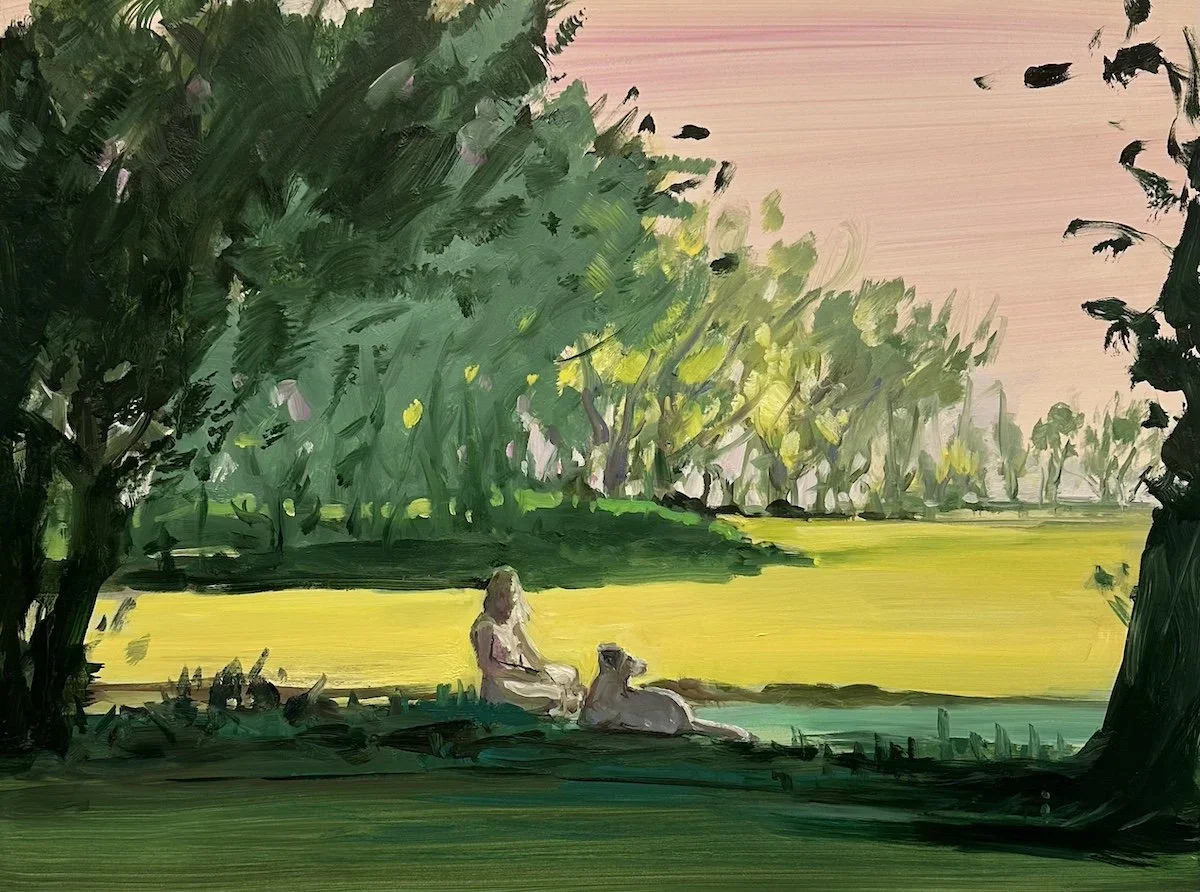
Wild, Precious, Life, Deborah Brown’s first show at Marrow Gallery, encompasses work from different series--shadow paintings, still lifes, statuary, street vendors and runaways. The paintings are inspired by the artist’s domestic interior; landscapes of her hometown, Pasadena; neighborhoods in Manhattan and Brooklyn, where the artist lives and works; and her fantasy narrative of escape with a canine companion. On one level the paintings read as a chronicle of things seen or imagined. On another, the work references the process of making visible through paint the thoughts and feelings of the artist as she regards these subjects and the way they function as a self-portrait, externalizing an interior world. The artist’s treatment of these things and places becomes a representation of consciousness and what it feels like to experience the world.
The still life paintings are based on objects in the artist's collection, treasured mementos gathered over the years and displayed in her domestic environment. One of the still life paintings depicts Greek Orthodox icons that her mother purchased in the 1960s at the Athens flea market. The paintings are constructed with vibrant brushstrokes, which create a feeling or an emotion rather than a realistic depiction of the objects. The work of Henri Matisse, Lovis Corinth and Gabrielle Münter are important influences that Brown draws on in her construction of the paintings. Through the action of the paint, the objects come alive and assume a mysterious character perhaps as emissaries to another world.
The landscapes derive from daily walks the artist took with her dog during the years of the pandemic. The subject matter is drawn from East Williamsburg in Brooklyn, where the artist’s studio is located. Brown also trains her attention on street vendors in Manhattan’s Chinatown. Strong color configurations and jagged patterns of dark and light structure the compositions, placing the viewer in a dynamic relationship to the subject matter. Silhouetted figures traverse the streets and reference a tradition in 19th century Western painting of the “flaneur,” an anonymous urban figure who wanders the city without obvious purpose. A subtext of the work is the many micro-communities that make up the fabric of New York City. Brown depicts these communities with respect and wonder in order to make visible their ever-changing, dynamic presence and contribution to the life of New York City.
Other landscapes are derived from the artist’s hometown, Pasadena, California, and the Huntington Library and Gardens, where the artist spent time as a child and continues to visit. Her paintings of statuary are based on 17th century Italian sculptures displayed outdoors in the museum’s lush gardens amid the palm trees and Italian cypresses of Southern California. The artist plays on the contrast between the staid classical figures and the riotous landscape elements that surround them, giving the work a contemporary feeling.
In contrast to the other series, the “runaways” depict an imaginary world whose protagonist is a nude female figure as she walks on the beach, journeys through the forest or paddles a canoe. The presence of a protective canine companion implies a departure from a domestic setting. By drawing on the art of exploration epitomized by Winslow Homer and Fredric Remington, and the Western canon of the female nude, Brown revisits themes by male artists and upends readings of familiar images. In the artist’s portrayal, the female protagonist is now depicted as the hero, the explorer and the adventurer. Through her choice of perspective, the artist places us in an ambiguous relationship to the subject, blurring the line between our status as intruder and observer. Presiding over the landscape as a solitary wanderer, Brown's protagonist appears powerful, as if she has returned to familiar narratives to write her own story.