
New Work: Raven Chacon @ SFMOMA
Editor’s Pick
“I was lucky enough to be invited to the preview of Raven Chacon’s New Work exhibition at SFMOMA, except, well, this is the sort of exhibition that is illegible with the gallery full of people having a good time together in celebration, networking, etc. The group was shuffled to a different space for drinks and small bites and a performance, all of it pleasant, but not why I was there. I egged my partner on to slink away mid-performance, and she agreed, but she made sure to take us back to the gallery. Now the room was completely empty; we wandered through the black space animated by a seven-channel video, peered at smaller works nestled in corners, and I was glad we did. What was obviously a good show, even in a crowd, was great. I’ve a type of work that gets to me: work that combines the archival and the speculative, the ‘real’ and myth and fiction, and this has a lot of that energy, and I heartily recommend giving it a little of your time.”
-Aaron Harbour
About the Exhibition
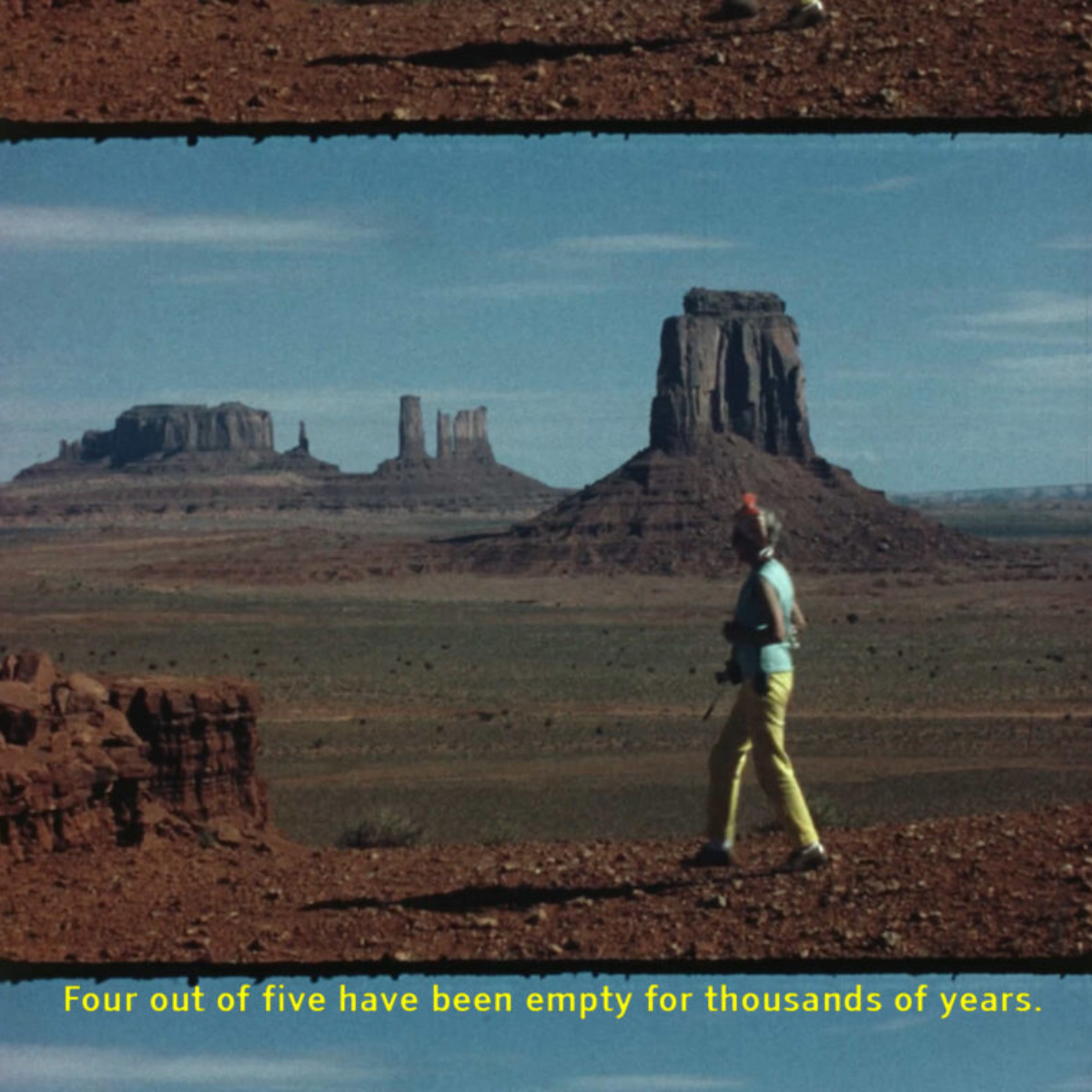
Pulitzer Prize–winning composer and artist Raven Chacon brings Diné worldviews into his sonic and visual practice to amplify Indigenous voices and sovereignty. For his first West Coast solo exhibition, the artist takes museum visitors on a journey through the vast landscapes of Navajo Nation. In the five-channel video installation The Naming of Names, Chacon brings Ray Bradbury’s science fiction narratives together with found footage recorded by foreign travelers in the 1950s and ‘60s. These silent film excerpts drawn from the Prelinger Archives in San Francisco are accompanied by a soundtrack of field recordings and electronic music composed by the artist. Chacon reimagines the desert and canyons in Southwestern tribal lands where he is from as otherworldly, disrupting the limited representation of history and challenging the colonial gaze behind these images. Layered topographical drawings of Tséyiʼ (also known as Canyon de Chelly) on Earth and Valles Marineris on Mars are exhibited alongside the installation, linking canyons from different celestial bodies together while collapsing time and space.
Debuting during the United States’ Semiquincentennial, this timely commission retells the ongoing expansion and renaming of territories that have occurred throughout the nation’s occupation of these lands. Chacon’s speculative depictions also invite us to consider the larger histories of human and non-human inhabitants, places both terrestrial and beyond, all unfolding in their own time.
Learn how he created this installation and what Martian landscapes have to say about home in Raven Chacon’s Martian Home Movies.